
How to pack artwork for moving comes down to four things: take the hanging hardware off, protect the face of the piece, sandwich it between two rigid boards, and keep it standing on its edge from the wall to the truck. Glass gets a few strips of masking tape so it cannot shatter into the work, and mirrors get the same board sandwich plus corner protectors. Done that way, a framed print or a large hall mirror travels as safely as anything else on the truck.
Key takeaways
Framed artwork and mirrors should be packed one piece at a time, with the hanging wire and screw-eyes removed, a soft layer over the face, a rigid board cut to size on each side, and blankets or cardboard around the outside. Glass glazing on a framed work can be taped with masking tape on the glass only, while Perspex or acrylic glazing should not be taped at all. Every framed piece and every mirror travels upright on its long edge, never flat under other items and never resting on a corner. A canvas with flaking paint, an ornate gilded frame or a high-value original needs a conservator's advice or a purpose-built crate before it goes anywhere.
What do you need to pack artwork and mirrors?
The one item people skip, and later regret, is the rigid board. Bubble wrap alone stops scratches but does nothing to stop a corner of the dining table punching through a canvas when the truck brakes on Ipswich Road. Before the packing day, pick up a few picture and mirror cartons along with your moving boxes and packing supplies, then gather this:
- Telescopic picture and mirror cartons, or flattened cardboard boxes you can cut down to make boards
- Sheets of corrugated cardboard, foam board or thin hardboard, one for each side of every piece
- Acid-free tissue or plain unprinted packing paper for the face of prints, drawings and watercolours
- Bubble wrap or foam sheet for padding, plus cardboard corner protectors for heavy frames and mirrors
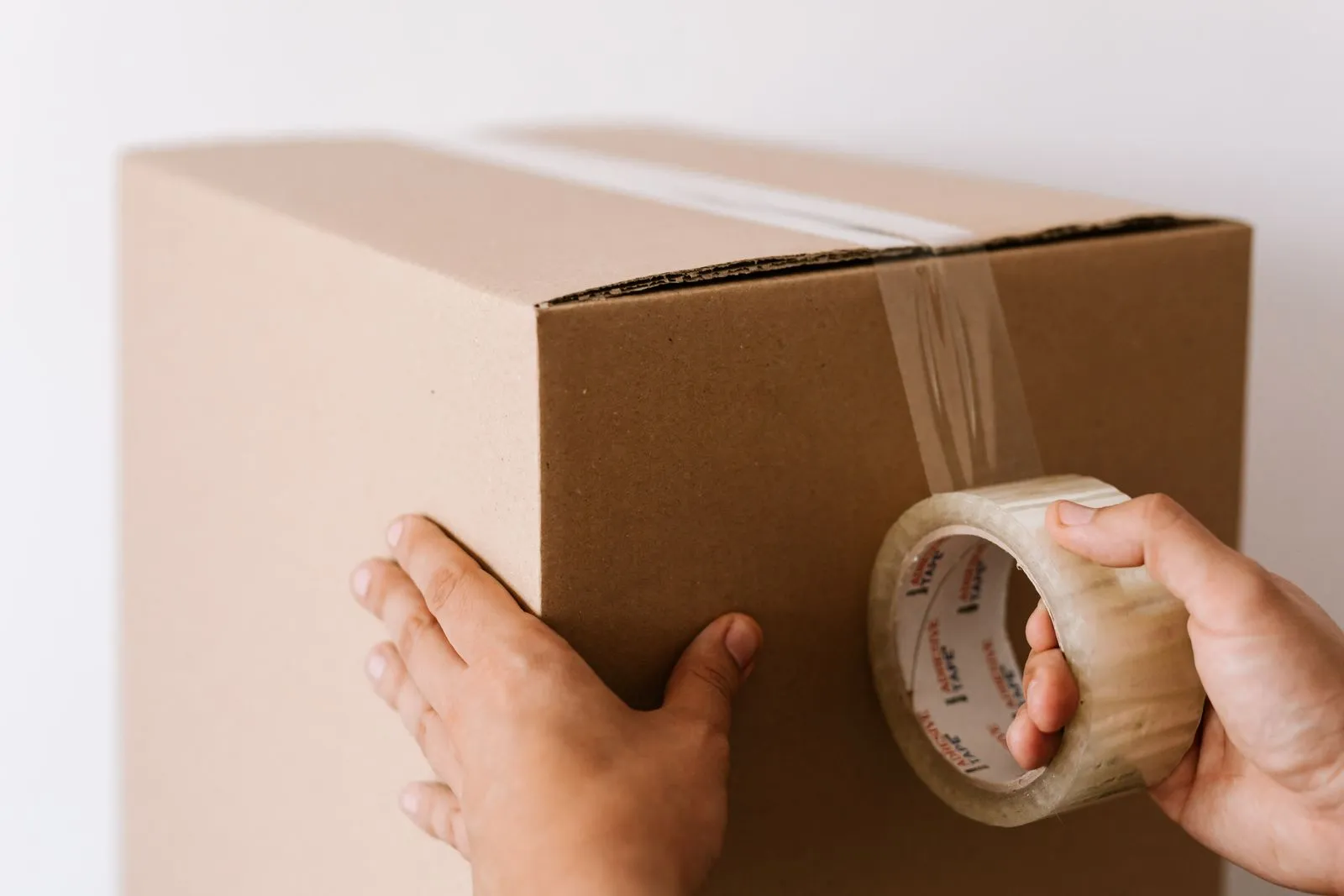
- Low-tack masking tape for glass, and strong packing tape for the outside of the parcel only
- Moving blankets, a marker pen, and a small zip-lock bag for each set of hooks, wires and screws
Two warnings on materials. Newspaper should never touch a print, drawing or watercolour, because the conservation guidance from the Australian Institute for the Conservation of Cultural Material notes that printed inks can transfer onto the work. And if you use bubble wrap near a painted or gilded surface, put the bubbles facing outwards, because the same guidance warns bubble wrap can leave its pattern pressed into paint and gilding.
How to pack artwork for moving, step by step
Start the night before, not on the morning the crew turns up. A hallway of framed photos in Ashgrove is not a job to rush between loading the fridge and finding the kettle. Clear a table, pad it with a blanket, and work on one piece at a time.
Take the piece off the wall and lay it face down on the blanket. Unscrew the screw-eyes and hanging wire from the back, bag them, and tape the bag to the back of the frame or label it to match. Museums & Galleries of NSW lists removing screw-eyes, wires and hooks as one of the first steps before any painting is moved, because loose hardware scratches whatever it sits against. Then turn the piece face up and protect the front: tissue or plain paper for a glazed print, a sheet of foam or a soft layer for a mirror.
Cut two boards slightly larger than the frame. Lay one under the piece and one over the face, pad any gap between the glass and the board so nothing moves, then wrap the whole parcel in bubble wrap and tape the outside. Write FRAGILE, THIS WAY UP and the room it is going to on two faces of the parcel.
Should you tape the glass on a framed picture?
For real glass, yes, and there is a right way to do it. The AICCM reCollections guide to handling and transport says to tape glass glazing with masking tape so that if it breaks, the pieces hold together rather than falling into the artwork. For a small frame it suggests one vertical strip through the centre, one horizontal strip and one on each diagonal, with more strips on larger frames.
Keep the tape on the glass only. The same guide warns that tape on the frame can damage the paint or finish when it comes off. Fold the end of each strip back on itself so it is easy to lift, and peel it off slowly at a low angle as soon as the piece is unpacked. Perspex and other acrylic glazing is a different story: the guide says there is no need to tape it and the tape can be hard to remove, so leave acrylic untaped and just protect it from scratches.
How do you pack a large mirror for a move?
A mirror is a sheet of glass with a coating on the back, and it fails the same way glass does: at the corners and edges, or when something presses on the middle. So it gets the same treatment as a glazed frame, with more attention to the corners. Put cardboard corner protectors on all four, lay a soft layer over the face, and build the board sandwich. For a big bevelled mirror off a dresser, a telescopic mirror carton is worth it.
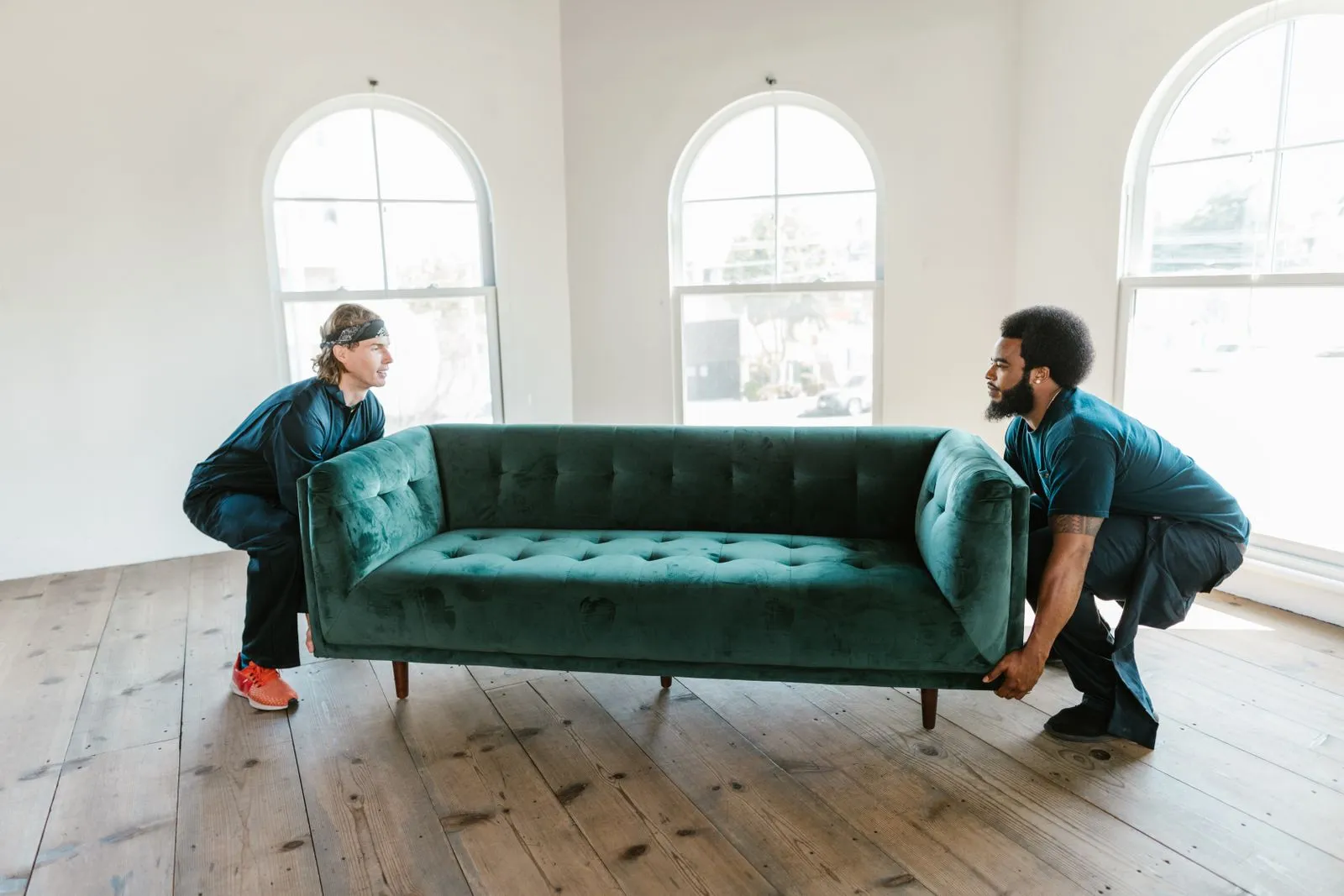
Size changes the job. A wrapped full-length mirror from a Carindale bedroom is a one-person carry. A large overmantel mirror in a heavy timber frame, or a mirrored wardrobe door, is a two-person lift with a four-wheel dolly, and it should come off the wall with someone holding it while the fixings are undone. If the mirror is glued to the wall rather than hung, leave it for a glazier.
How should artwork travel in the truck?
Upright, on its long edge, packed tight. Our crews out of the Archerfield depot think about this part most, because it is where damage happens. A framed piece lying flat under a stack of boxes takes the weight on its face, and one lying loose against the truck wall can slide and land on a corner when the driver brakes for the lights on Kessels Road.
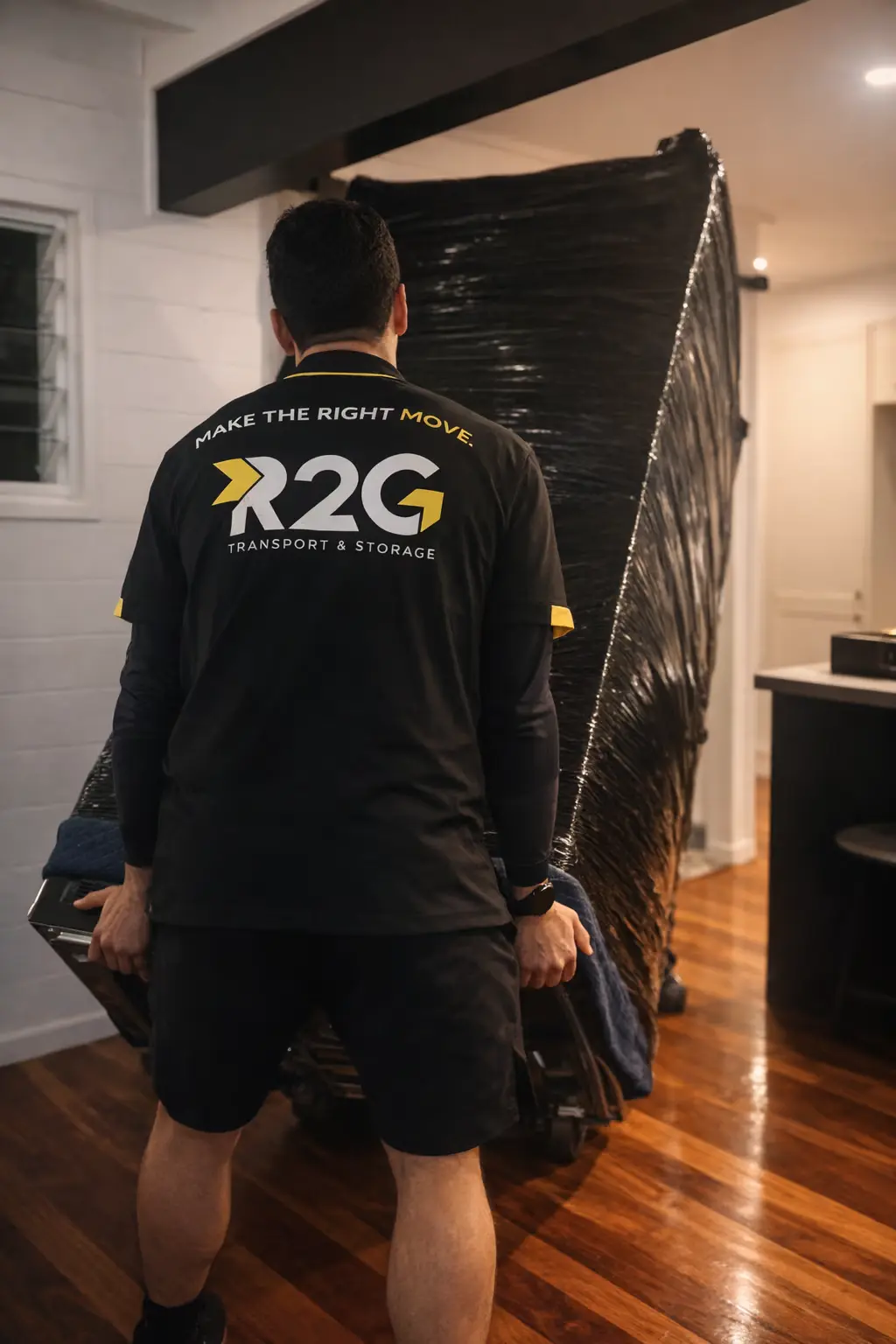
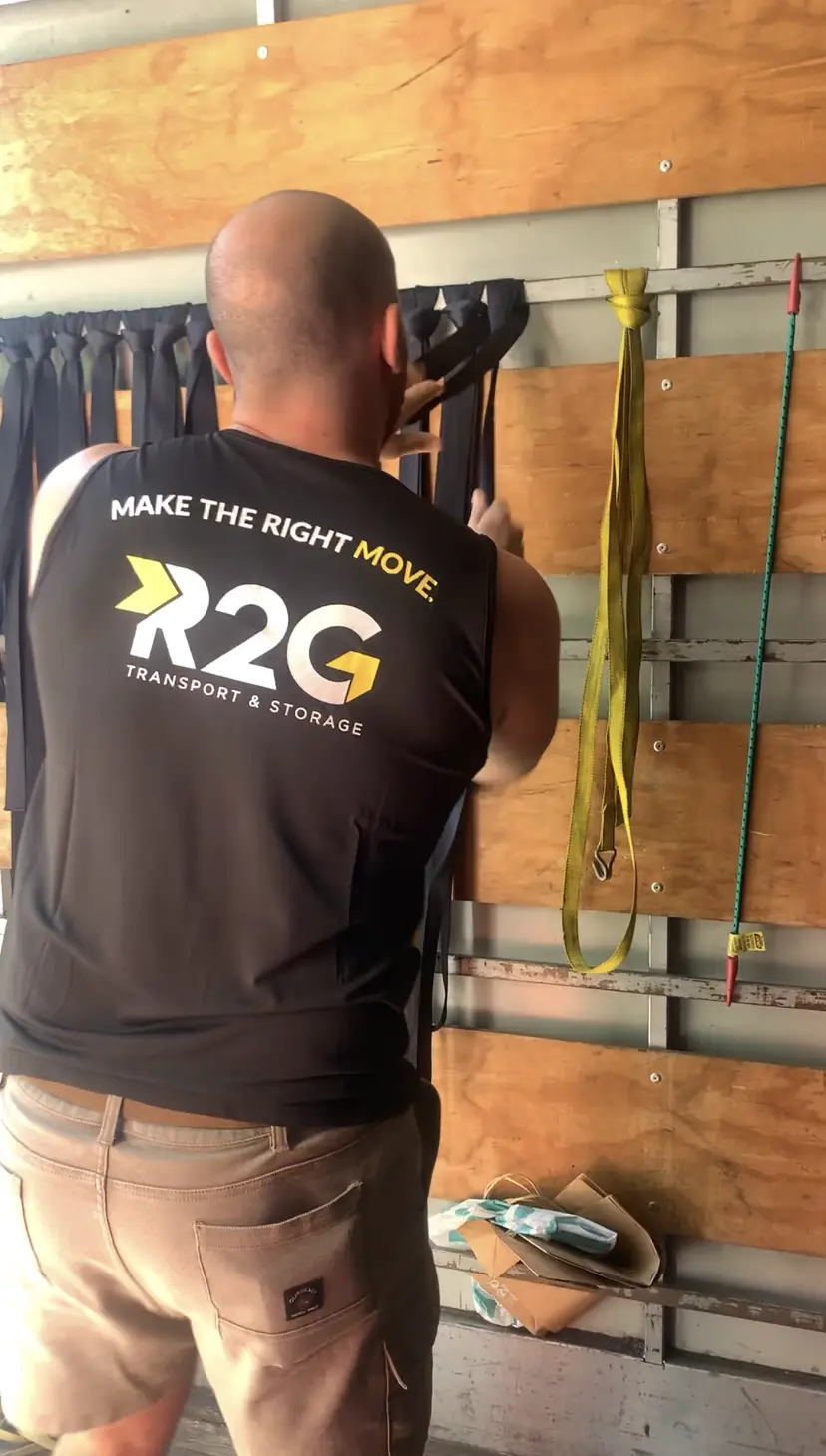
On our trucks, mirrors and framed pieces go in standing up between mattresses or flat solid items like a table top, wrapped in moving blankets and strapped to the side wall so they cannot tip. Nothing heavy goes in front of them that could fall against the face. The conservation advice says the same thing in plainer terms: AICCM tells handlers never to set a painting down on one corner, and always along one complete edge. Our guide to packing a TV for moving follows the same upright logic.
“The frames that get damaged are rarely the ones in the truck. It is the print left leaning on a hallway wall while two people carry a lounge past it. Wrap it, label it, and stand it in a room the crew is not walking through.”
, R2G Moving Team
What about canvases, unframed prints and original paintings?
An unframed stretched canvas has no glass to protect it, so the face must never be touched or pressed. Hold it by the outer edges of the stretcher, not by poking fingers between the stretcher bars and the canvas, because the AICCM guidance says that can crack and flake the paint. Wrap it in a soft layer with nothing resting on the paint, then build a box around it with a little air gap.
Check the paint before anything else. AICCM's advice is that a painting with flaking paint should travel flat and face up, and that you should talk to a conservator before moving it. Its guide to caring for paintings also points out that painting supports are sensitive to humidity, with swings in moisture causing the support to swell and shrink and the paint above it to crack. For a valuable original, a fragile gilded frame or a large work on paper, a specialist fine art crate or a conservator's packing is money well spent,.
Does humidity matter when moving artwork in Queensland?
It does, mainly at the unpacking end and in storage. A parcel sealed in plastic can trap moisture. AICCM's reCollections guide notes that the plastic packing material it describes is not suited to long-term storage because it can seal in moisture. On a move from Brisbane up to Edge Hill or Trinity Beach in the wet season, the advice is the same: unwrap framed works within a day or two of arrival and let them sit in an air-conditioned or well-ventilated room before they go back on the wall.
If your artwork is going into storage in Brisbane between houses, wrap it in breathable layers such as blankets and cardboard rather than sealing it in plastic, and stand it upright off the floor. Our post on storing furniture in a humid climate goes through the same moisture problem for timber and upholstery, and most of it applies to framed pieces too.
Who is responsible if a picture or mirror breaks?
Under the Australian Consumer Law, a removalist must provide the service with due care and skill and take reasonable steps to avoid causing loss or damage, as the ACCC sets out in its consumer guarantees guide. Who packed the item matters a great deal if something does go wrong, because a box packed by the owner and a box packed by the crew are different conversations.
Mention high-value or sentimental pieces when you book so the crew knows before they arrive. Take a quick photo of each piece before it is wrapped, and if something does arrive damaged, keep every fragment and photograph it before you clean up. Our guide to what removalists are liable for explains how insurance and damage claims work in more detail.
Before the crew arrives
Have every framed piece and mirror off the walls, wrapped, labelled and standing upright against an inside wall in one room the crew will not need to walk through. Point out any original, heirloom or unusually heavy piece to the crew leader at the start of the job, not halfway through loading.
Frequently Asked Questions
Can you lay framed pictures flat when moving?
It is safer not to. A framed picture lying flat takes the weight of anything stacked on top on its glass and face, and that is how glass cracks in transit. Stand each wrapped piece on its long edge, packed snugly between flat solid items, with nothing heavy leaning against the front. The exception is a painting with flaking paint, which should travel flat and face up after you get advice.
Is bubble wrap enough to protect artwork in a move?
Bubble wrap protects against scratches and light knocks, but on its own it will not stop a sharp corner or a heavy item from pushing through. Pair it with a rigid board on each side of the piece, or a telescopic picture carton. Keep the bubbles facing outwards near painted or gilded surfaces, because bubble wrap can leave an imprint on soft paint.
How do you move a mirror without breaking it?
Protect the corners first with cardboard corner protectors, cover the face with a soft layer, then sandwich the mirror between two rigid boards or put it in a mirror carton. Carry it upright with two people if it is large, and load it on its edge between solid flat items in the truck. Never stack anything on a mirror lying flat.
Should I hire professional packers for expensive artwork?
For original paintings, heirlooms, or anything with an ornate or fragile frame, it is worth either having it professionally packed or getting a conservator or fine art handler to crate it. For ordinary framed prints and mirrors, careful packing at home with the method above is usually enough.
Getting your artwork packed and moved properly
Our crews pack framed art and mirrors in Brisbane and Cairns as part of a normal house move, using picture cartons, rigid boards, corner protectors and blankets, and load them upright and strapped in the truck. If you would rather not do it yourself, our professional packing services in Brisbane cover the whole house or just the fragile rooms, and our removalists in Cairns handle the same work in the Far North. Tell us what you have on the walls and get a free quote.