
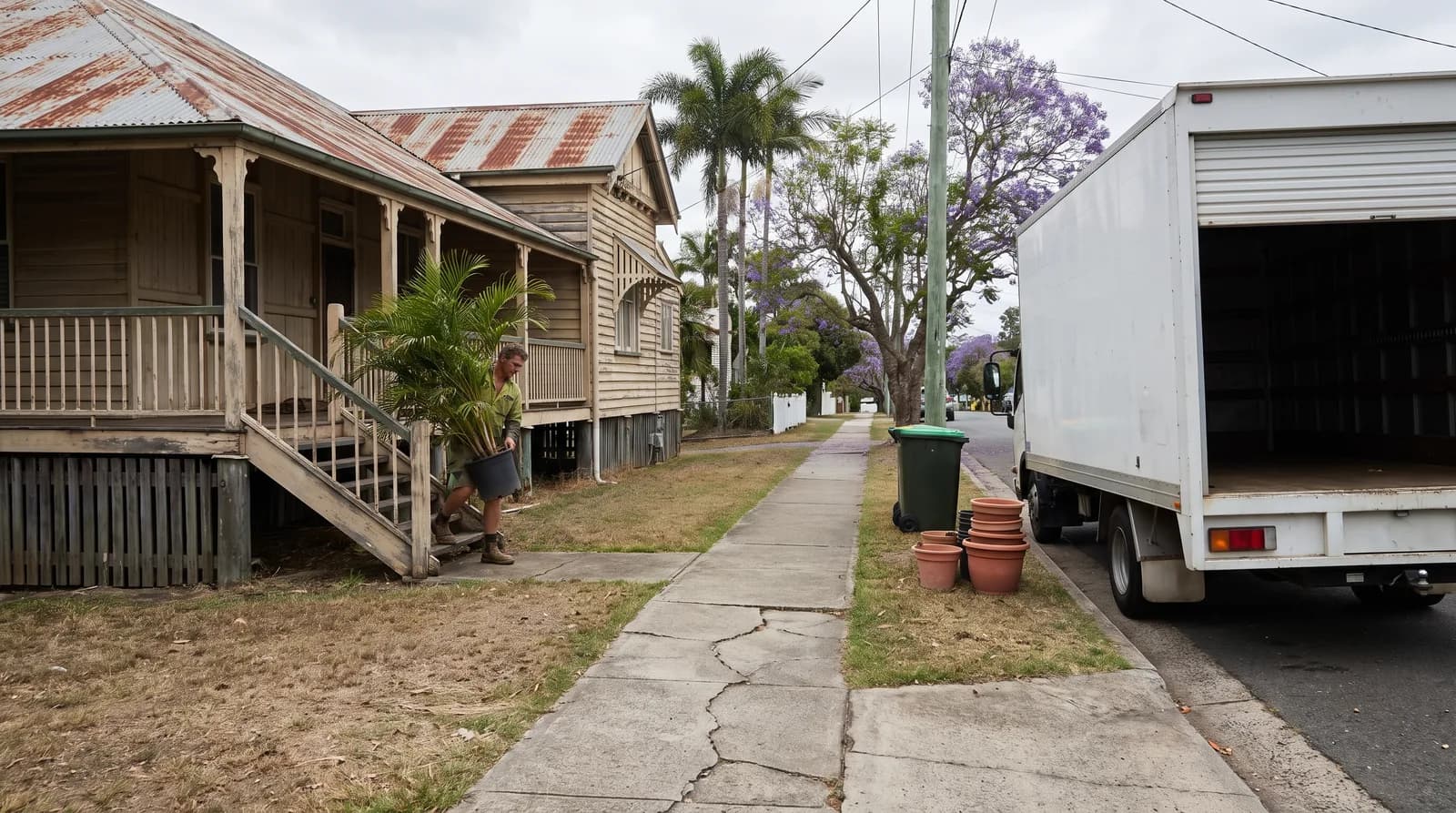
Most house plants can legally cross into Queensland, but the soil they are sitting in is what the law actually controls, and a handful of plant families are restricted depending on which state you are leaving. For a household move the answer is usually the same: bare root what you want to keep, leave the potting mix behind, and have a plan for anything on the restricted list. Here is what Biosecurity Queensland controls, what a removalist will and will not put on a truck, and how to decide plant by plant.
Key takeaways
Queensland restricts specific plant material, soil and equipment coming in from other states rather than banning house plants outright. The inbound list published by Business Queensland covers banana, grape and sugarcane plants from any state, pine family plants from South Australia and Victoria, tomato and potato family plants from Victoria and Western Australia, cucurbits from the Northern Territory, and potted plants hosting pyriform scale from Western Australia. Soil and potting mix is the high-risk carrier, so a bare-rooted plant is much simpler than a potted one. Under the Biosecurity Act 2014 everyone here carries a general biosecurity obligation not to spread a pest, disease or contaminant. Most removalists, R2G included, will not carry live plants in a sealed trailer on a multi-day interstate run. These rules change, so check the current Business Queensland page before you pack.
Can you bring plants into Queensland when you move interstate?
Yes, in most cases. People assume otherwise because they picture the manned quarantine checkpoints on the Western Australian and South Australian borders. Queensland works differently. Rather than stopping vehicles, the state publishes a list of restricted plant material and puts a legal duty on the person moving it. Business Queensland's restrictions on moving plant material, soil and related equipment into Queensland, last updated in April 2026, set out which items need a biosecurity certificate and which states each restriction applies to.
That duty is worth understanding before you wrap a single pot. Business Queensland's page on the Biosecurity Act 2014 explains that everyone in Queensland has a general biosecurity obligation to take all reasonable and practical steps to ensure they do not spread a pest, disease or contaminant. Nobody is going to search your car at Coolangatta. A potted fig carrying fire ants into a clean part of the state is what the Act exists to prevent, and the obligation sits with you, not the truck. On runs like removalists from Sydney to Brisbane, the garden is the first thing we raise at the quote.
Which plants are restricted coming into Queensland?
The restrictions are pest driven, so the list reads like a farm inventory rather than a nursery catalogue. Most of it will never touch a suburban courtyard, but two or three entries catch households out every year. From the April 2026 Business Queensland inbound list, the items needing a biosecurity certificate include the following.
- Banana, grape and sugarcane plants, plus their soil and machinery, from any state
- Pine family plants and timber, covering cedar, fir, spruce and pine, from South Australia and Victoria, plus pine species from Western Australia because of European house borer
- Tomato and potato family plants from Victoria and Western Australia, driven by tomato-potato psyllid, and Solanaceae plants and soil from potato cyst nematode land in Victoria
- Cucumber, melon, pumpkin, squash and zucchini plants and their soil from the Northern Territory
- Potted plants from Western Australia that host pyriform scale
- Mango plants from anywhere mango malformation disease is present, and hay, fodder, straw and soil from South Australia because of branched broomrape
Read that list twice if you are leaving Victoria or Western Australia, because those two states carry the most entries. A lemon tree in a pot is usually fine. A tomato plant, a chilli bush or an ornamental nightshade coming out of Melbourne is a different matter, and so is the mix around its roots. Open the current page rather than trust any blog, ours included, because these get amended whenever a detection changes the risk picture.

Why is the soil the real problem and not the plant?
Ask anyone who works in plant biosecurity what worries them and it is rarely the plant. It is the fifteen litres of potting mix underneath it. Soil moves fire ants, nematodes, fungal pathogens and weed seed, and it does all of that invisibly. A plant lifted, washed clean of every trace of media and wrapped in damp newspaper is a different item from the same plant in its pot, which is why bare rooting is the standard advice.
Do the work a week out, not the night before. Lift the plant, hose the root ball clean over a garden bed rather than the driveway so the runoff stays on the property, trim anything broken, then wrap the roots in damp newspaper inside a bag tied loosely at the stem. Ferns, herbs, pelargoniums and most succulents take it in their stride. Mature citrus and anything woody with a deep taproot often will not, and that is where you decide whether the plant travels or gets rehomed.
The pot stays, the plant travels
Tip the potting mix out at the old address into green waste, not into a bag that rides north on the truck. Wash the pot and pack it dry, or replace it at the other end. Pots are heavy and cheap, potting mix is the restricted carrier, and a clean empty pot raises no question from anybody. Leave seven to ten days between bare rooting and moving day so the plant settles into its wrapping.
What do the fire ant rules mean for your pots once you arrive?
This part catches people, because it bites after you land rather than on the way in. Business Queensland's restrictions on moving plant material within Queensland, last updated in August 2026, require a biosecurity instrument permit to move soil out of a fire ant biosecurity zone or between zones. Those zones cover a large slice of South East Queensland, where most interstate arrivals are heading. Bringing pots in is one question. Shifting a trailer load of garden soil from Springfield Lakes to an address outside the zone is a separate one, and our Brisbane removal team works inside those boundaries most weeks.
The same page lists a biosecurity instrument permit for moving electric ant carriers out of the electric ant biosecurity zone, and that list is deliberately broad: soil, potted plants, cuttings, turf, mulch, hay, compost and manures. Our Cairns crews meet this on Far North Queensland jobs. If your new address sits inside a declared zone, the rule is a standing obligation on the property, not a one-off at the border. Check the Queensland biosecurity zone maps for the boundary rather than guessing from a suburb name.
Will a removalist put your plants on the truck?
Usually not, and it is worth knowing why rather than taking it as a brush-off. An interstate load out of Sydney or Melbourne sits in a sealed trailer for two to four days, depending on the run and where you fall in the drop sequence. Inside that trailer it gets hot, it stays dark, and nothing gets watered. Plants come off looking cooked. Goods-in-transit cover is written for household goods rather than living things, so no policy stands behind the fiddle-leaf fig if it arrives dead.
What our crews do instead is straightforward. On a local Queensland job, from a Coorparoo Queenslander to a Chermside lowset, plants ride in the back of your own car and we load them last so they spend the least time in the sun. On a long haul we say plainly at the quote stage that the plants travel with you or get rehomed, then we ready the rest of the garden: pots emptied and stacked, stakes and trellises broken down, the mower drained of fuel, the wheelbarrow strapped flat. Our general guide to moving interstate covers how that timeline hangs together.
“The plants people regret leaving are almost never the expensive ones. It is the cutting off a grandmother's plant, and a cutting travels in a lunchbox. Take the cutting, rehome the parent.”
, R2G Moving Team
What should you do with the plants that cannot come?
Every interstate move leaves a pile that is not travelling, and a plan beats standing on the kerb at 06:30 on moving day giving plants away. In rough order of how well they work:
- Take cuttings six to eight weeks out, strike them in a small pot of clean mix, then bare root the seedling for the trip. Herbs, succulents, pelargoniums and most vines go this way easily
- Give the rest to neighbours, a buy-nothing group or a community garden, which usually clears a courtyard over one weekend
- Sell the good specimens on a local marketplace two to three weeks out, while there is still time to hand them over in daylight
- Ask the incoming owner or tenant whether they want the established garden pots, a common line on a settlement handover
- Replace on arrival, and price it honestly: a mature potted plant is not cheap, but neither is a specialist plant transport service
The one option we would steer you away from is putting the pot in the boot and hoping. The duty under the Act sits on the person moving the material, and fire ants do not need many chances to establish somewhere new. If you are landing in the south east, what to expect when you land in Brisbane walks through the first few weeks.

How do you get a biosecurity certificate if you need one?
If something on your list is restricted, the certificate is issued at the departing end, not at the Queensland border. Business Queensland's guidance is that a biosecurity certificate for moving items into Queensland can be issued by an appropriately authorised officer from an interstate authority or under interstate legislation, so the call goes to the department of agriculture or primary industries in the state you are leaving. Allow a fortnight. Inspections are booked, not instant, and the week before a move is a bad time to discover a lead time.
For a household move you usually will not need one, because the plant is either off the list or easier to leave behind. Certificates are the normal path for a nursery shifting stock, less so for a family shifting a house. Ring 13 QGOV or the equivalent line in your own state and ask about your specific plant, because the restrictions are written by pest and host species rather than by common name.
Frequently Asked Questions
Can I bring my potted plants from Sydney to Brisbane?
Usually yes, provided the plant is not on Queensland's inbound restricted list and you deal with the soil. Bare root it, dispose of the potting mix in New South Wales, and carry it in your own vehicle rather than on the removal truck. Tomato and potato family plants and pine species are the ones to check first.
Do I need a permit to bring plants into Queensland?
Only if the plant, its soil or its equipment appears on the Business Queensland inbound restrictions list, in which case you need a biosecurity certificate issued by the authority in the state you are leaving. Ordinary house plants without soil generally do not need one. The general biosecurity obligation under the Biosecurity Act 2014 still applies to you once you are here.
Will removalists transport plants interstate?
Most will not, and R2G does not put live plants in a sealed trailer on a multi-day run. The trailer is dark and hot, nothing gets watered, and goods-in-transit insurance is written for household goods rather than living things. On a local Queensland job we load plants last. Interstate, they travel with you.
What happens if I bring a restricted plant in without a certificate?
You are in breach of the Biosecurity Act 2014, which places a general biosecurity obligation on every person to take all reasonable and practical steps not to spread a pest, disease or contaminant. Enforcement here is detection driven rather than checkpoint driven. The realistic risk is not a roadside fine, it is seeding a pest into a clean area.
Sorting the garden before the truck arrives
R2G Transport & Storage has been running Queensland removals since 2014, from depots at Archerfield and in Cairns City, with AFRA accredited crews. On an interstate job we walk the garden with you at the quote stage, flag anything needing a certificate or a bare-rooting week, and load the rest so the plants that travel go in your car rather than our trailer. Talk to us about our interstate removals service, and when the dates are firm, get a free quote.