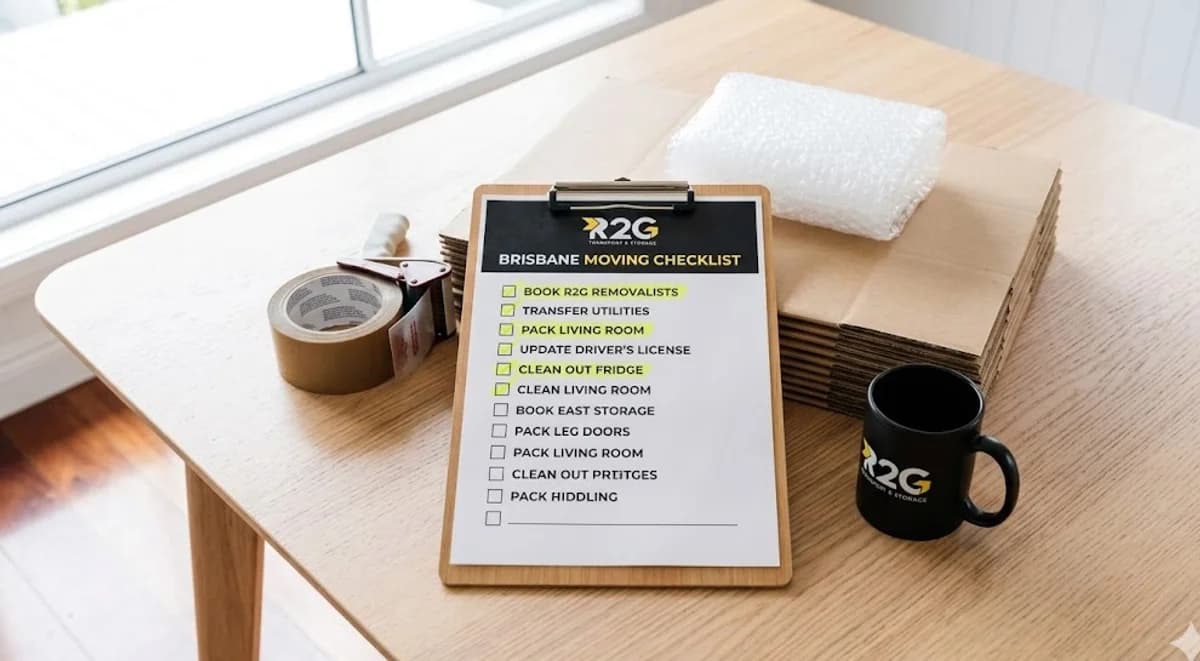
A moving inventory list is a room-by-room record of everything that is coming with you, what is staying behind, and anything that needs special handling. Make it before you ask for a quote, then use the same list to number your boxes and to tick items off when the truck is unloaded. It takes an evening or two, and it is the one document that helps at every stage of a move.
Key takeaways
A moving inventory list is a room-by-room record of the furniture, appliances and boxes going on the truck, plus anything that is staying or needs special care. Removalists use it to plan the truck size, the crew and the time on the job, so an accurate list gives a more accurate quote. Number every box and write the number and the destination room on the list. Photograph valuable or fragile items before they are wrapped. Keep one copy on your phone and one on paper, and check it off as each item comes off the truck.
What is a moving inventory list, and what does it actually do?
It is a plain list of what you own and what is moving, grouped by room. Nothing fancy. A spreadsheet, a notes app or a clipboard all do the job. What matters is that someone who has never seen your house could read it and picture the load.
That last point is why removalists ask for one. The quote depends on volume, access and time, and volume is the part people guess wrong most often. A three-bedroom house in Chermside with a double garage and a full shed is a very different job to a three-bedroom house in Ashgrove where the owners have already sold half the furniture. Without a list, the quote is built on assumptions. With one, it is built on what is actually there.
The list keeps working after the quote is accepted. It tells you how many cartons to get, it becomes your packing plan, and on the day it is the checklist you use to confirm that everything that left the old place turned up at the new one.
Why do removalists want an inventory before they quote?
Because the inventory decides three things before anyone books a date: the truck, the crew and the hours. A list that shows a king bed, a three-seater lounge, a fridge, a washing machine and forty boxes points to a different setup to one that adds a piano, a gym rack and a garage full of tools.
Getting that wrong costs everyone. If the truck is too small, the crew either squeezes it, which is how things get damaged, or comes back for a second load. If the crew is too small for the heavy items, the job slows right down. Our Brisbane crews would far rather hear about the pool table, the upright freezer and the outdoor setting in the quote than discover them under a tarp on the morning of the move.
Interstate moves lean on the list even harder. Most long-distance quotes are worked out on volume, because the space you take up on the truck is what the move is priced around. If you are planning a move with our interstate removalists, a full inventory, including the shed and the space under the house, is what lets the quote hold up when the truck arrives.
“The items that cause problems on moving day are almost never on the list. It is the second fridge in the garage, the trampoline out the back and the boxes in the roof space that nobody mentioned.”
, R2G Moving Team
How do you make a moving inventory list room by room?
Start at the front door and walk the house in order, one room at a time, writing down everything that is moving. Open the cupboards and wardrobes as you go. Then do the outside areas, which is where most of the forgotten items live. A simple layout for each line works well:
- Room: lounge, kitchen, main bedroom, garage, shed, under the house, patio.
- Item: what it is, with a size where it matters, such as a queen bed, a six-seater dining table or a 75-inch TV.
- Quantity: the number of chairs, stools or cartons.
- Handling notes: fragile, very heavy, needs dismantling, glass top, or stays with you in the car.
- Destination: the room it goes into at the new place.
Group the small stuff. You do not need to list every mug or every shirt. "Kitchen, 12 cartons, crockery and pantry" is enough. Spend your effort on the large furniture and appliances, because those are what decide the truck and the crew, and on anything valuable, because those are what you will want a record of if something goes wrong.
Mark what is not coming as well. A separate column or a line through the item for anything staying, being sold or going to the tip stops it ending up on the truck. That matters a lot in a downsizing move, where a third of the furniture might be going to family or to charity.
What should you record for valuable or fragile items?
More detail than you think you need. For anything valuable, fragile or hard to replace, write down the make and model, the serial number if there is one, and its condition before the move. Then take photos from a few angles, including any existing scratches or chips, before it is wrapped.
This is the same advice the government gives for contents insurance. Moneysmart's contents insurance guide suggests listing your belongings with details such as serial numbers, receipts, warranties, photos, condition and purchase date, and taking a video of each room as a record. The Insurance Council of Australia's underinsurance guide makes the related point that knowing the current replacement value of what you own is the way to avoid being underinsured. A moving inventory done properly covers most of that work in one go.

It also makes a real difference if something is damaged. Under the Australian Consumer Law, the ACCC's consumer guarantees say service providers must use due care and skill and take reasonable steps to avoid causing loss or damage. Showing what condition an item was in before the move is much easier with a dated photo and a line on the list. Our guide to whether removalists are liable for damage goes through claims and insurance in more detail.
How should you number and label boxes against the list?
Give every carton a number and a room, and write both on the box and on the list. Box 1 to 20 for the kitchen, 21 to 35 for the main bedroom, and so on. Write on the top and on at least one side, because the tops get covered once cartons are stacked three high in the truck.
Add a short contents note on the list, not on the box. "Box 14, kitchen, good glasses and the coffee machine" tells you what is inside without advertising it to anyone walking past the truck. Mark the cartons you will need first, such as bedding, the kettle and the kids' things, with a different coloured tape so the crew can put them somewhere easy to find.

Count the cartons as you pack and you will also know how many you need. If you are still sourcing them, you can buy moving boxes in the sizes you need, and our post on the moving day checklist covers what to sort out in the final week.
What do people usually leave off a moving inventory?
The same things, again and again. In most of the jobs we run, the surprises come from outside the main living areas, where things are out of sight and easy to forget. Before you call the list finished, walk these spaces with it in your hand:
- The garage and shed: tools, a second fridge or freezer, bikes, ladders, a workbench.
- Under the house: very common in high-set Queenslanders, where whole rooms of storage sit below the living level.
- The roof space and the tops of wardrobes: suitcases, Christmas decorations, old paperwork.
- The yard: outdoor furniture, pot plants, a trampoline, a barbecue, a kids' cubby.
- Items at someone else's place, or in a storage unit, that need to join the load.
Anything you find goes on the list, along with whether it is coming. A gas bottle from the barbecue, paint tins and pool chemicals also need a note, because removalists generally will not carry flammable or hazardous goods on the truck, and you will need another plan for them.
Do you need an inventory for storage too?
Yes, and it is arguably more useful there than on the truck. Goods in storage can sit for weeks or months, and it is easy to forget exactly what went in. A numbered list of what is in the unit, with notes on where the boxes are stacked, saves a lot of digging when you need one particular carton.
Keep the storage list separate from the moving list if only part of the load is going into storage, which is common when a settlement date and a moving-in date do not line up. If you are using our secure storage between homes, tell us what is going into storage and what is going straight to the new place, and keep a copy of both lists.
How do you use the inventory on moving day?
Have the list on your phone, and a printed copy as a backup. Walk through it with the crew leader when they arrive, so the crew knows about the fragile items, the things that are staying and anything that needs dismantling. That five-minute walk-through stops most of the questions that would otherwise come up mid-load.
At the other end, tick items off as they come off the truck. Check the boxes by number, and look over the furniture and appliances you photographed. If anything looks damaged, note it and take a photo before the crew leaves, rather than finding it a week later. If you would rather not do the packing yourself, our Brisbane packing team can number and list the cartons as they pack, so the inventory is done for you.
Frequently Asked Questions
What should be on a moving inventory list?
A moving inventory list should cover every room and outdoor area, listing furniture, appliances and the number of boxes, with sizes for large items and notes on anything fragile, heavy or needing dismantling. Add serial numbers and photos for valuable items, the destination room at the new home, and a separate note of what is staying, being sold or going to the tip.
Do removalists provide an inventory list?
Some removalists will record what is moving during a quote or a survey, and packers often list cartons as they pack. Even so, it is worth keeping your own list. You know what is in the roof space, the shed and under the house, and your own record with photos is the one you will want if you ever need to check that something arrived.
How long does it take to make a moving inventory list?
For most homes it takes an evening or two. A unit with a small storage cage can be listed in an hour or so, while a family house with a garage, shed and space under the house takes longer because that is where most of the forgotten items are. Starting early and adding to the list as you pack keeps it manageable.
Should I take photos for a moving inventory?
Yes, especially of valuable, fragile or hard-to-replace items. Photograph them from a few angles before they are wrapped, including any existing marks, and capture serial numbers on electronics and appliances. A short video walking through each room is also a quick way to record what you own and the condition it is in before the move.
Getting a quote built on what you are actually moving
R2G Transport & Storage has been moving households out of our Archerfield and Cairns depots since 2014, and we are AFRA accredited. Send your inventory through with your quote request and our removalists in Brisbane and our Cairns crews will plan the truck, the crew and the time around what is really going, including the garage and the space under the house. When your list is ready, get a free quote and we will take it from there.