
Updated October 2026 with current Queensland Office of Fair Trading guidance, 2026-27 QCAT fees and the latest ACCC advice on fake reviews.
You can spot a dodgy removalist before moving day by checking nine things: a valid ABN, how they want to be paid, a written itemised quote, proof of insurance, a real business address, believable reviews, a price in line with the market, branded trucks and crew, and whether they pressure you. Most rogue operators fail several of these checks at once. If a mover asks for a large cash deposit, will not put the price in writing or cannot show a certificate of insurance, walk away. The Queensland Office of Fair Trading itself warns that upfront payments can be risky and suggests finding a removalist who does not ask for one.
Key Takeaways
- Check the ABN on the Australian Business Register and make sure the name matches the quote
- Avoid cash-only operators and large upfront deposits. Pay by card if you pay anything upfront
- Insist on a written, itemised quote that shows the crew size, minimum hours, travel time and every surcharge
- Ask for a current certificate of currency for public liability insurance and ask what cover applies to your goods
- Treat a quote far below the others as a warning sign, not a bargain
- If a mover holds your goods for more money, keep every message, contact Policelink on 131 444 and lodge a complaint with the Office of Fair Trading
The stories follow a familiar pattern. A family accepts a reasonable quote, the truck is loaded, and then the price goes up. In one case reported by The Canberra Times in August 2025, a family said they agreed on a $900 fee, the mover then demanded $1,600, and their belongings were held in the truck mid-journey (the mover denied the claims). In Queensland, the Office of Fair Trading issued a public warning in 2020 about a Brisbane removalist after receiving 68 complaints. Almost every one of these situations is preventable, whether you are booking local Brisbane removalists, Gold Coast movers or an interstate removalist.
Red Flag 1: No ABN or Business Registration
Every legitimate removalist business in Australia operates under an Australian Business Number. If a company cannot provide an ABN on request, or the ABN they give you is registered to a different business name, walk away. Check the number yourself on the free Australian Business Register before you pay anything. Rogue operators sometimes use borrowed ABNs, so confirm the business name on the register matches the name on the quote.
Quick ABN check
Go to abr.business.gov.au, type in the ABN, and confirm the entity and trading name match the quote. Also check how long the ABN has been active. A business that registered last month and claims ten years of experience is not telling you the truth.
Red Flag 2: Cash Only With a Large Upfront Deposit
Legitimate removalists accept bank transfer or card. A company that insists on cash only, especially for a large deposit, is a serious warning sign. Cash leaves no paper trail and no chargeback option. The Queensland Office of Fair Trading notes that upfront payments can be risky and suggests finding a removalist who does not ask for one. If a deposit is required, keep it small, get a receipt, and pay by credit card so you can ask your bank about a chargeback if the service is never provided. The Office of Fair Trading also suggests asking what surcharge applies to card payments, so there are no surprises on the day.
Red Flag 3: No Written Quote With Itemised Costs
If a removalist will not put the quote in writing, there is a reason. Verbal quotes are the most common source of price disputes on moving day. A proper quote should itemise the hourly rate or fixed price, number of movers, truck size, minimum hours, travel time, any depot or call-out fee, insurance details, and any surcharges for stairs, heavy items or long carries. A vague line like from $120 per hour with no breakdown leaves you open to surprise charges. Ask for the quote by email or PDF, read it carefully and keep a copy.
Red Flag 4: No Certificate of Insurance
A professional removalist should carry public liability insurance and be happy to send a current certificate of currency on request. Goods in transit cover is a separate question. The Queensland Office of Fair Trading points out that most removalists only have insurance for their own vehicles in case of an accident, so ask exactly what cover applies to your belongings and whether you should arrange transit insurance yourself. If a company stalls, refuses, or says insurance is not needed for local jobs, find someone else.
Red Flag 5: No Physical Address or Depot
Rogue operators often run from a single vehicle with nothing behind them. If a company has no listed business address and no depot, be cautious. Search the address on Google Maps and Street View: you should see a warehouse, depot or office, not an empty lot or a fake location. Companies that change their name every few months are often trying to outrun bad reviews and unresolved complaints.
Red Flag 6: Suspicious or Missing Google Reviews
Genuine reviews built up over several years are one of the best ways to sort good removalists from bad ones. The ACCC says it is against the law for a business to create fake or misleading reviews, and lists warning signs including a spike in highly positive or negative reviews over a short period, many reviews from the same source, similar reviewer names, generic reviews without specific detail, and reviews written in similar language. Read the 1-star reviews carefully. If the complaint is always the same, such as the price doubled on the day or the goods were held until more money was paid, believe the pattern.
Read the 3-star reviews
The most balanced reviews are usually in the middle. 5-star reviews can be faked and 1-star reviews can be exaggerated, but 3-star reviewers tend to describe what actually happened.
Red Flag 7: Quote That Is Dramatically Cheaper Than Everyone Else
Get at least three written quotes before you book. If two removalists quote around $1,600 for your 3-bedroom move and a third quotes $780, something is missing. Either the cheap quote leaves out key items, or the operator plans to add charges on the day. A classic pattern is to win the job with an unbeatable price, load the truck, then refuse to unload until you pay much more. For context, Airtasker puts typical Brisbane rates at $103 to $172 an hour for two movers and a truck (June 2026). See our Brisbane moving cost guide for current market rates and typical totals by home size.
Red Flag 8: No Branded Trucks or Uniforms
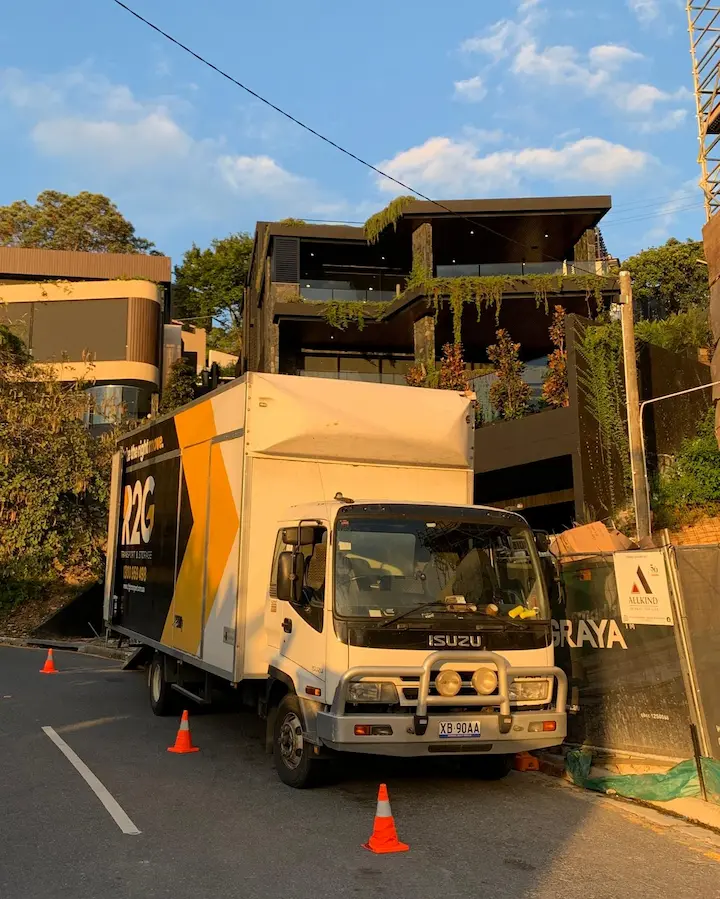
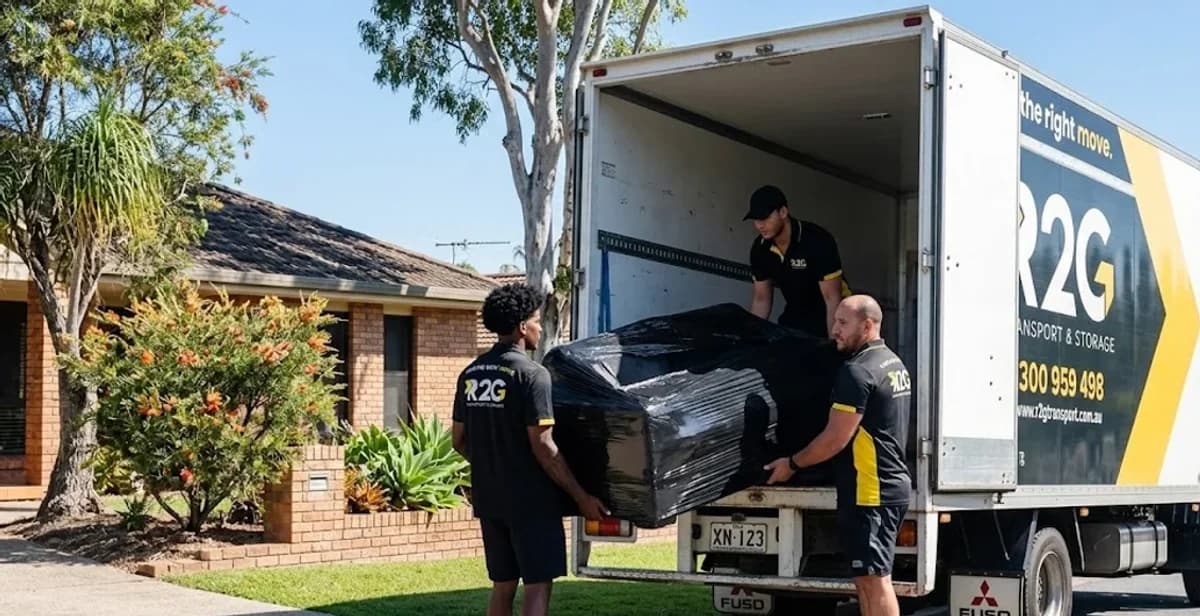
Professional removalists invest in their brand. Branded trucks, uniforms and paperwork cost money, and operators who rely on repeat business and referrals spend it gladly. Unmarked trucks, crew in plain clothes and handwritten receipts are common signs of an operator that plans to disappear if anything goes wrong. Ask to see photos of their fleet before you book. A legitimate company will send them quickly.
Red Flag 9: Pressure Tactics and Last-Minute Changes
High-pressure sales tactics do not belong in the removals industry. If a company pushes you to pay now to lock in a discount that expires within the hour, treat it as a warning. Other tactics to watch for include changing the crew size at the last minute, raising the hourly rate the day before the move, demanding extra cash on arrival for fuel or tolls that were not on the quote, and refusing to start until you pay more. A reputable removalist will never hold your belongings to force a payment.
Why Are Dodgy Removalists Still So Common?
Dodgy removalists persist because the barrier to entry is low and the tactics have become more convincing. Ten years ago, most rogue operators were a van and a classified ad. Today some run professional-looking websites with stock photos of trucks they do not own and booking forms that look identical to legitimate companies. Some pay for search ads, so a customer searching for removalists in their suburb can see a rogue operator listed above an established one.
Removals is not a licensed trade in the way building or electrical work is. The main legal requirement for the truck is the right driver licence class: in Queensland, a car licence covers vehicles up to 4.5 tonnes gross vehicle mass, while larger removal trucks need a light rigid, medium rigid or heavy rigid licence (Queensland Government). That is why your own checks matter so much. The Australian Furniture Removers Association (AFRA) is the main industry body, and the Queensland Office of Fair Trading suggests checking whether a removalist is an AFRA member.
What Are the Most Common Moving Scams in Australia?
The four moving scams we hear about most often are the hostage scam, the phantom hourly rate, the disappearing deposit and the fake review farm. Knowing the shape of each one makes it much easier to spot as it unfolds.
The Hostage Scam
The mover quotes a reasonable price, loads the truck, then refuses to unload at the destination until you pay far more than the original quote, usually in cash. Police often treat these as civil price disputes rather than crimes. In the Canberra case above, ACT Policing said it did not identify any criminal offences. That is why prevention matters: never sign a blank or open-ended job sheet, get every charge in writing before loading begins, and do not pay cash under pressure.
The Phantom Hourly Rate
A quote comes through at $120 per hour, which sounds great. What it does not mention is a three-hour minimum, a call-out fee, depot-to-pickup travel, a fuel levy and a stair surcharge. By the time the add-ons are applied, the real hourly cost is far higher. Under the Australian Consumer Law, businesses must not mislead you about the price, and a quote that hides large compulsory charges can be misleading. Always ask for the total estimated cost, not just the hourly rate.
The Deposit Disappearance
You pay a deposit to lock in your date. The day before the move, calls go unanswered and the phone number is dead. Sometimes the operator reappears under a new business name a few months later. This is why the Office of Fair Trading flags upfront payments as risky. If you must pay a deposit, keep it small and pay by card, because your bank may be able to reverse the payment through a chargeback if the service is not provided (ASIC Moneysmart, July 2026).
The Fake Five-Star Review Farm
Rogue operators know that Google reviews are the first thing people check, so some buy or generate fake reviews. Tell-tale signs include a burst of five-star reviews in a single week, near-identical wording, and reviewer profiles with no photo and no other reviews. Scroll past the glowing reviews and read the 1-star reviews. If every negative review describes the same pattern, believe the pattern.
How to Verify a Removalist in 10 Minutes
If you are short on time, this is the pre-booking checklist we recommend to every customer who asks. Ten minutes of checking can save you from the worst moving day of your life.
- Type the ABN into abr.business.gov.au and confirm the business name matches the quote
- Search the business name plus the word scam. If the first page has horror stories, walk away
- Look at Google reviews, sort by Most Recent, and read the last five carefully
- Ask for a certificate of currency for public liability insurance, and ask what cover applies to your goods
- Ask whether the quote includes GST, travel time, fuel, stair surcharges and minimum hours
- Confirm the deposit amount and payment methods. Refuse cash-only operators
- Check the business address on Google Street View. A real depot or office should appear
- Check whether they are an AFRA member using the AFRA find a removalist search
What Should You Do If You Have Been Scammed by a Removalist?
Act quickly and document everything. Start with the steps below, and keep every email, text message, quote and receipt, because consumer complaints and tribunal claims are decided on documentation.
- If your goods are being held or you feel unsafe, contact Policelink on 131 444 (Queensland, 24/7). Call Triple Zero (000) in an emergency
- Contact your bank about a chargeback if you paid by credit or debit card and did not receive the service
- Lodge a complaint with the Queensland Office of Fair Trading or call 13 QGOV (13 74 68). Interstate, use NSW Fair Trading, Consumer Affairs Victoria or your state equivalent
- Report it to Scamwatch, run by the National Anti-Scam Centre within the ACCC
- If the business is an AFRA member, ask AFRA about its dispute resolution process
- Leave factual reviews on Google and ProductReview to warn others
“The cost of checking a removalist properly is 15 minutes of research. The cost of not checking can be your entire household. Always verify before you pay.”
, R2G Moving Team
How Do You Get Your Money Back in Queensland?
In Queensland, start with the Office of Fair Trading and escalate to the Queensland Civil and Administrative Tribunal (QCAT) if needed. The Office of Fair Trading usually makes contact within 10 working days and aims to resolve most conciliation matters within 30 days, but it cannot award compensation or force a business to refund you. QCAT can. It hears consumer and trader disputes for goods and services valued up to $25,000, and you do not need a lawyer. From 1 July 2026, the QCAT application fee is $96.30 for claims up to $1,000, $164.30 for claims over $1,000 and up to $10,000, and $405.60 for claims over $10,000.
Other states have equivalent bodies: NSW Fair Trading and the NSW Civil and Administrative Tribunal, and Consumer Affairs Victoria and the Victorian Civil and Administrative Tribunal. Behind all of them sits the Australian Consumer Law, which applies to every business in the country. Under its consumer guarantees, services must be provided with acceptable care and skill, be fit for any purpose you made known, and be supplied within a reasonable time if no time was agreed. A removalist who damages your furniture through careless handling may be in breach of those guarantees.
What Does AFRA Membership Actually Mean?
The Australian Furniture Removers Association (AFRA) is the industry body for removalists in Australia, with more than 250 members. According to AFRA, applicant members are screened and regularly audited, all members hold public liability insurance, and consumers have access to a no-cost dispute resolution process. AFRA membership does not guarantee a perfect move, but rogue operators rarely bother with a voluntary, audited membership. It is a reasonable green flag when you are weighing up two similar quotes.
Frequently Asked Questions
How much deposit should a removalist ask for?
Ideally none, or a small amount. The Queensland Office of Fair Trading says upfront payments can be risky and suggests finding a removalist who does not ask for one. Never pay a large deposit in cash.
Can a removalist hold my furniture until I pay more?
A reputable removalist will not. If it happens, stay calm, keep every message, contact Policelink on 131 444 and your bank, and lodge a complaint with the Office of Fair Trading. Police may treat it as a civil price dispute, so a written quote is your strongest evidence.
How do I check if a removalist is legitimate?
Check the ABN on the Australian Business Register, ask for a certificate of insurance, read recent Google reviews, look up the depot address on Street View, and check AFRA's member search. A legitimate company will pass all five in minutes.
Do removalists need a licence in Queensland?
Removals is not a licensed trade like building or electrical work. Drivers need the right licence class for the truck, such as a light, medium or heavy rigid licence for larger trucks, which is why checking ABN, insurance and AFRA membership matters.
Where do I complain about a removalist in Queensland?
Lodge a complaint with the Queensland Office of Fair Trading online or on 13 QGOV (13 74 68). If that does not resolve it, you can apply to QCAT for disputes up to $25,000.
The R2G Standard
R2G Transport & Storage is an AFRA member that has moved Queensland households and businesses from its Brisbane and Cairns depots since 2014. We carry public liability insurance, run branded trucks with uniformed crews, and have more than 900 Google reviews. Every quote is itemised and in writing, and we never ask for large cash deposits. If you want to skip the red flags entirely, get a free quote from our team.
Looking for more guidance on choosing the right team? Read our full guide on how to choose the right moving company in Australia or the Brisbane-specific breakdown on how to choose removalists in Brisbane.