
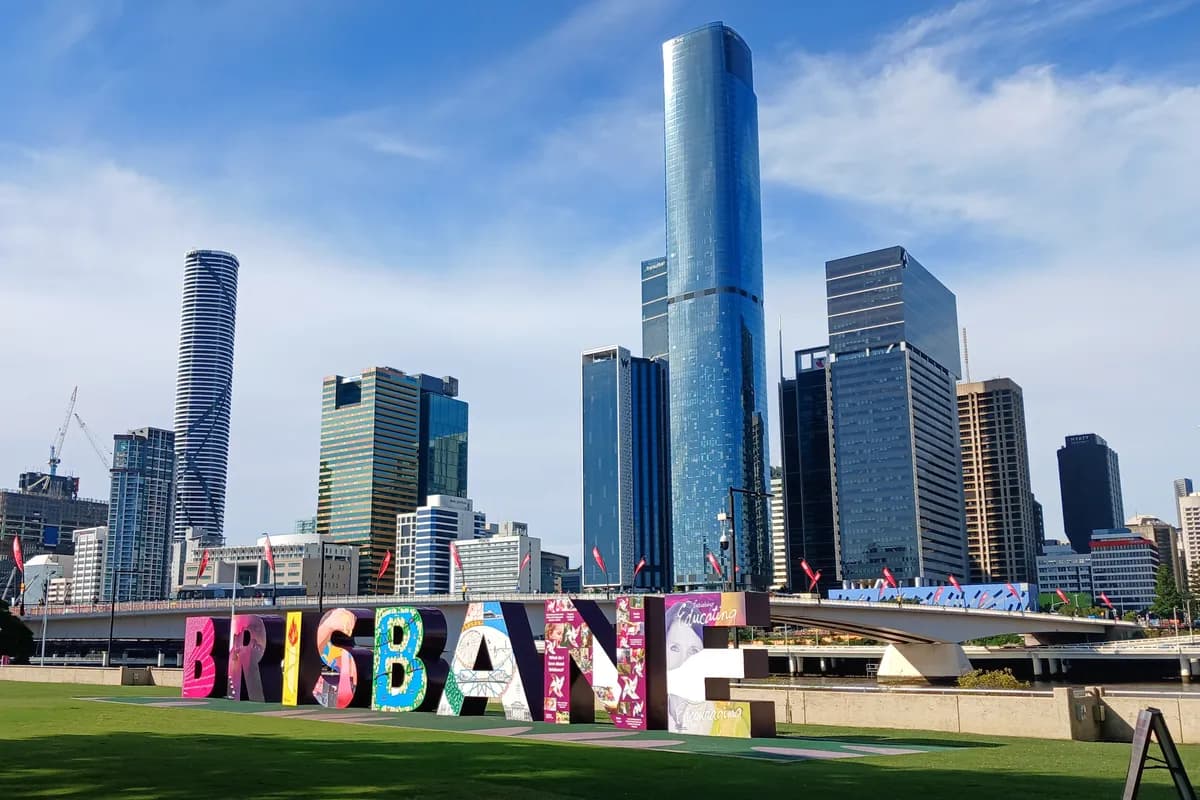
Queensland Migration 2026 Mid-Year Update: Where People Are Moving
Queensland's status as Australia's interstate migration capital held through the first half of 2026. Net interstate migration into the state continued to outpace the national average, with the strongest flows landing in South East Queensland and an emerging acceleration in Cairns, Townsville and the regional growth corridors. This is the mid-year update on where Australians are actually moving in 2026, based on ABS Estimated Resident Population data and the Regional Australia Institute / Commonwealth Bank Regional Movers Index.
The 30-second summary
- Queensland net interstate migration: roughly 25,000 to 30,000 residents per year
- New South Wales remains the biggest source state, with Sydney leading outflows
- Brisbane vacancy: 0.6% in early 2026, the lowest level on record
- Cairns LGA tracking towards 200,000 residents by 2031 per QGSO projections
- Regional Queensland gaining a larger share of inflows than in any previous cycle
- Affordability gap remains the dominant driver
Where the migration is coming from
The Regional Australia Institute and Commonwealth Bank Regional Movers Index tracks relocation flows across more than 14 million CBA customers. The dominant pattern in 2026 is the same as 2025: New South Wales loses more residents than any other state and Queensland gains them. The flow from Sydney specifically accounts for around 60% of the inflow into Queensland.
Victoria sits second as a source of Queensland-bound migrants, with Melbourne the dominant origin city. Western Australia and South Australia are smaller contributors but the per-capita flow from WA in particular has accelerated as the East Coast becomes more accessible via direct flights.
Where they are going within Queensland
South East Queensland still absorbs the lion's share. Brisbane, the Gold Coast, the Sunshine Coast, and the Brisbane peri-urban band (Ipswich, Logan, Moreton Bay, Redlands) collectively take roughly 80% of all interstate inflows into the state. The Gold Coast and Sunshine Coast each book 7,000 to 9,000 net interstate migrants per year. Brisbane itself adds the bulk.
The shift in 2026 is the regional pickup. Cairns, Townsville and Mackay are each absorbing larger interstate flows than in any prior year. The drivers are the affordability gap (Cairns median house price near $764,000 versus Brisbane $1.2 million and Sydney over $1.6 million), the visible infrastructure pipeline (Cairns $1 billion hospital expansion, $360 million marine precinct), and the maturing remote-work cohort that no longer needs to live in a capital city.
Why people move
Three drivers dominate the 2026 data. First, housing affordability. The price gap between Sydney/Melbourne and regional Queensland is the single largest factor in the relocation decision. Second, lifestyle. Climate, outdoor access, and reduced commute time consistently rank in the top three reasons cited in surveys. Third, family. Either following family north, or returning to family who moved earlier in the cycle.
Career-driven moves account for a smaller but growing share, particularly in healthcare (driven by the Cairns Hospital expansion and ongoing Brisbane hospital projects), defence (driven by the Cairns Marine Precinct), and remote-friendly roles that allow southern salaries with regional cost of living.
Implications for the housing market
The migration flow has practical consequences. Brisbane vacancy at 0.6% in February 2026 is among the lowest on record, and Cairns vacancy at 1.0% has been below 1% for two years. Rental prices have climbed accordingly. House prices in Brisbane crossed $1.2 million in early 2026 on CoreLogic Home Value Index data. In Cairns, the median house price is up around 11% per year on average since 2021.
For interstate movers, the timing of arrival matters more than ever. Securing a property in advance of moving is significantly harder than it was three years ago. Many movers now book short-term Brisbane storage or short-term Cairns storage for 2 to 6 weeks while they finalise a lease or settlement at the destination.
What this means for 2026 and beyond
Queensland's interstate migration cycle does not show signs of ending. The southern affordability gap remains. The Olympic 2032 infrastructure pipeline in Brisbane continues to mature. The Cairns growth pipeline is sequenced through 2031. Expect the cycle to continue through at least 2027, with regional Queensland taking a steadily larger share of the inflow.
Methodology
Data sources: Australian Bureau of Statistics Regional Population, Queensland Government Statistician's Office migration data, Regional Movers Index, and CoreLogic Home Value Index. R2G's Moving Index 2026 has the full Q1 2026 data set.
For movers in 2026, R2G runs weekly interstate routes from Sydney, Melbourne and Adelaide into Brisbane and Cairns. Request a free quote for your interstate move.