Queensland is the most sought-after destination for interstate movers in Australia right now, and the numbers make that case without any interpretation required. More than 21,500 people relocated to Queensland from other states in the most recently recorded period. NSW lost nearly 24,000 residents in the same window. Victoria, South Australia, and Western Australia all contributed to Queensland's gain.
But moving to Queensland and moving to a specific Queensland city are two different decisions, and the two cities that most people are choosing between sit nearly 1,700 kilometres apart and offer genuinely different versions of the Queensland lifestyle. Brisbane is a capital city accelerating toward its 2032 Olympic hosting role, with all the employment concentration, infrastructure investment, and housing competition that brings. Cairns is a tropical city of approximately 170,000 people with one of the most distinctive natural environments in the country, a property market that still makes financial sense for most buyers, and a pace of life that residents who have made the move consistently describe as a revelation.
This guide uses real 2026 data to compare both cities across the factors that matter most when you are planning a relocation: housing costs, rental markets, cost of living, employment, lifestyle, and the practical logistics of hiring removalists Brisbane or removalists Cairns to get you there.
Queensland Migration Snapshot 2026
Queensland gained 21,595 interstate migrants. NSW lost 24,328. Top reasons people moved: upgrading to a better home (35%), reducing cost of living (32%), lifestyle change (18%), work or career (10%). Source: R2G Moving Index 2026 / ABS.
Queensland Is Winning the Migration Race
The R2G Moving Index 2026 tracked Queensland's position as the clear national leader for interstate migration, with 21,595 arrivals from other states in the most recent ABS period. The primary source was NSW, which shed 24,328 residents. Victoria contributed significantly, as did the ACT and South Australia.
The reasons people are leaving are consistent. Survey data shows that 35% of movers cited upgrading to a better home as their primary motivation, followed closely by reducing cost of living at 32%. Lifestyle change accounted for 18%, and work or career was cited by just 10%. That matters when comparing Brisbane and Cairns, because the employment-led case for Brisbane, while real, is not the dominant reason most people are moving to Queensland in 2026.
The SEQ corridor absorbed the bulk of Queensland's incoming population, with Gold Coast growing by 68,000 residents between 2019 and 2024, Logan by 61,000, Ipswich by 51,600, Sunshine Coast by 47,500, and Moreton Bay by 39,800. Cairns is not in the SEQ corridor but has been growing steadily, particularly among the remote work cohort that began moving north in earnest from 2021 onward.
Brisbane in 2026: Growth, Pressure, and Olympic Momentum
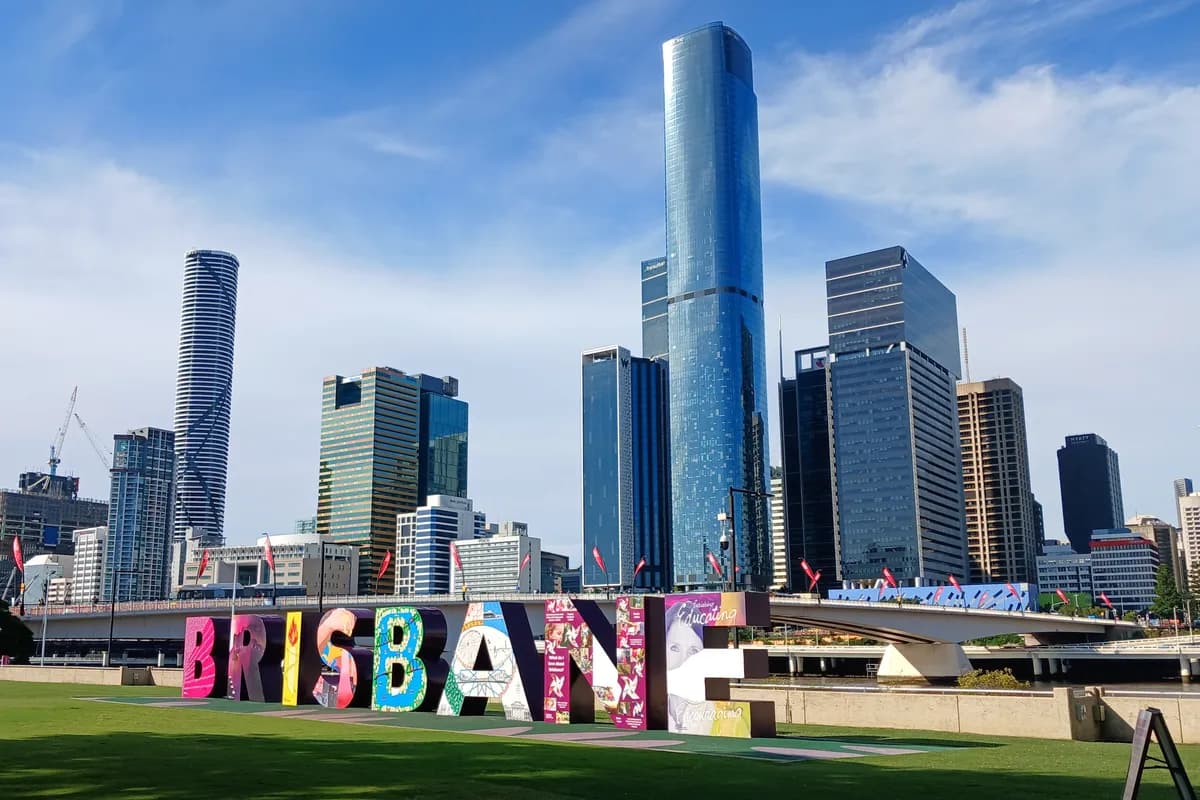
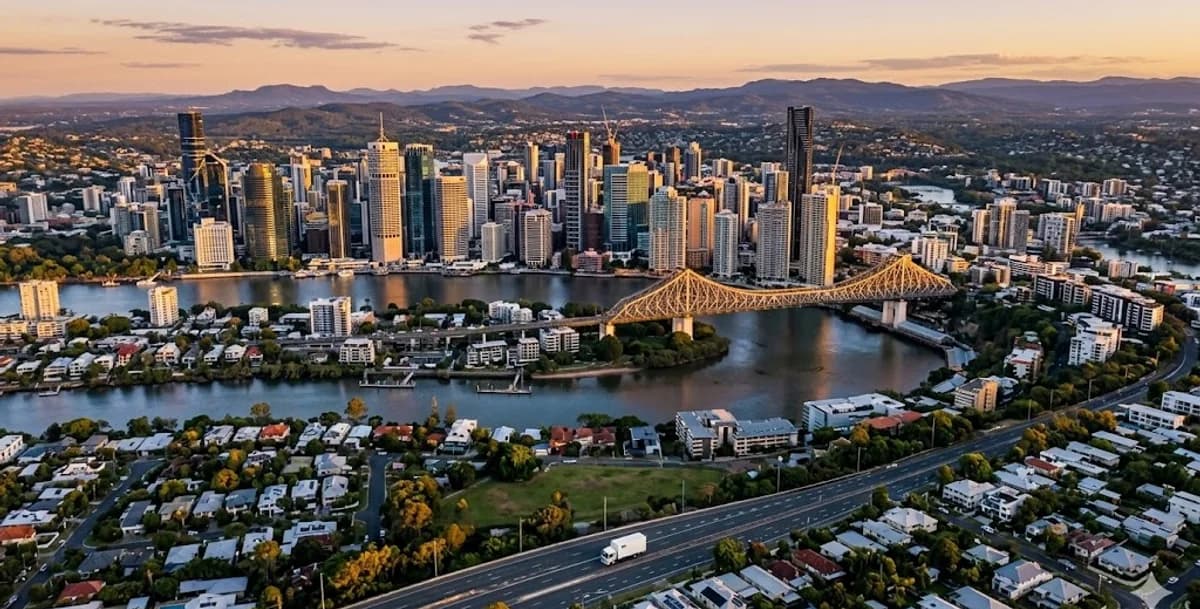
Brisbane has changed materially in the past five years. The city of 2026 is not the laid-back river city that Australians from the southern capitals used to visit and leave feeling slightly underwhelmed. It is a confident, rapidly developing capital with genuine urban energy, a significant pipeline of infrastructure projects, and a property market that has corrected the affordability gap with Sydney and Melbourne faster than most analysts predicted.
The Brisbane housing market tells the story clearly. Median house prices across greater Brisbane now sit above $950,000, with inner suburbs like New Farm, Paddington, and Ascot consistently clearing $1.5 million and above. The middle ring suburbs that represented accessible entry points in 2020 have repriced dramatically. Buyers arriving from Sydney or Melbourne are often surprised to find that the affordability advantage they expected has narrowed considerably for houses in well-connected locations.
The rental market is under significant pressure. Brisbane's vacancy rate stands at 0.8%, well below the 3% considered a balanced market. Median weekly rent has reached $727, and renters in popular inner and middle ring suburbs are regularly competing against multiple applicants. For people moving to Brisbane on a fixed timeline, securing accommodation before arrival is strongly advisable.
Brisbane Housing Data 2026
Median house price: above $950,000. Rental vacancy rate: 0.8% (severely tight). Median weekly rent: $727. SEQ population growth 2019-2024: Gold Coast +68,000, Logan +61,000, Ipswich +51,600, Sunshine Coast +47,500.
The 2032 Olympic and Paralympic Games are reshaping parts of Brisbane right now, not in 2032. The infrastructure pipeline is already active, with Cross River Rail, the Gabba precinct redevelopment, and the Northshore Hamilton transformation all underway. Woolloongabba, Bowen Hills, and parts of the inner north are changing faster than most locals anticipated. For buyers with a seven to ten year horizon, the case for Brisbane property is structural rather than speculative.
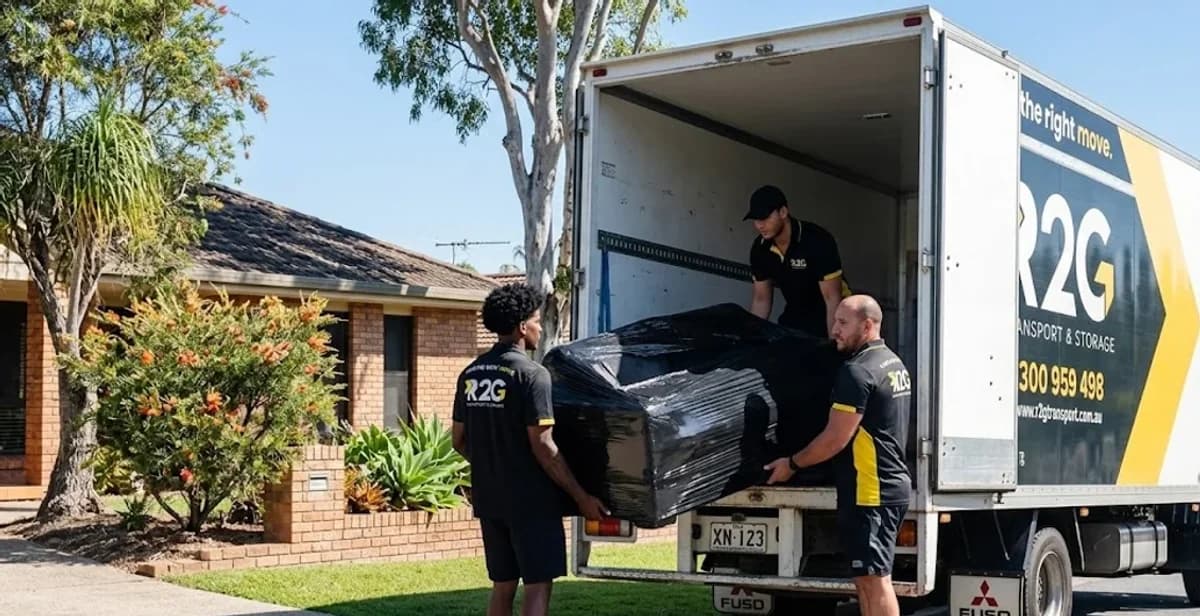
For the practical side of relocating to the capital, Brisbane moves carry specific considerations that catch interstate arrivals off guard. The city has a high concentration of traditional Queenslander homes built on stilts, which require experienced handling for heavy furniture. Inner city apartment moves involve body corporate requirements, lift bookings, loading zone restrictions, and certificates of insurance from your removal company. Experienced removalists Brisbane handle these variables as standard, but confirm experience with your specific property type before committing to a booking.
Cairns in 2026: Affordability, Lifestyle, and Growing Demand
Cairns operates on a different set of fundamentals, and the gap between what it offers and how it is perceived by people who have not lived there is one of the more persistent misconceptions in Australian relocation thinking.
The housing market in greater Cairns remains accessible by eastern seaboard standards. Median house prices sit around $570,000 to $590,000 across the broader region, and detached family homes with four bedrooms are available in the northern beaches and southern corridor for under $600,000. That gap relative to Brisbane, more than $350,000 on median figures, represents a structural lifestyle arbitrage for anyone whose income travels with them. The same budget that buys a two-bedroom unit in an outer Brisbane suburb buys a four-bedroom house with a pool in Cairns.
Rental median weekly rates in Cairns sit in the range of $490 to $530 for houses, roughly $200 per week below Brisbane equivalents. Vacancy is tighter than it was in 2022, reflecting the genuine increase in demand the city has experienced, but competition for rental properties is not at Brisbane levels. The rental pressure in Cairns is most concentrated near the esplanade and northern beaches, where demand from both permanent residents and the tourism workforce is strongest.
Cairns Property Snapshot 2026
Median house price: approximately $575,000. Median weekly rent: $490-530 (houses). Savings vs Brisbane median: approximately $375,000 on purchase price, $200/week on rent. Note: cyclone insurance premiums are significantly higher than Brisbane equivalents and should be factored into total ownership costs.
One cost that distinguishes Cairns property ownership from Brisbane is insurance. Far North Queensland properties carry cyclone-rated premiums that are substantially higher than what Brisbane homeowners pay. The difference on a comparable home can run to several thousand dollars per year.
For interstate movers heading to Cairns, the primary logistical variable is distance. Cairns sits approximately 1,700 kilometres from Brisbane by road, and interstate removal jobs of this length are genuine long-haul operations. Shared load services reduce cost significantly for households that can be flexible on delivery timing. Dedicated vehicles provide guaranteed arrival windows for those who need them. Professional removalists Cairns who work the interstate run regularly will have the vehicle configuration and scheduling experience that this distance demands. Local moves within Cairns are typically more straightforward than Brisbane equivalents because the city's compact layout means shorter distances and considerably less traffic complexity.
Cost of Living: What the Numbers Show
Housing is the biggest variable in any Brisbane versus Cairns comparison, but it is not the only one. Groceries in Cairns run approximately 8 to 12% higher than Brisbane for most staple items, driven by the cost of transporting goods to a geographically remote city. The exception is local produce during peak season, when the abundance of tropical fruit pushes prices below what supermarkets charge in the south.
Utilities in Cairns carry a meaningful surcharge relative to Brisbane. Air conditioning in a tropical climate is not an optional lifestyle choice. From November through April, cooling a Cairns home is a genuine ongoing cost, and electricity prices in Far North Queensland are above the state average. A Cairns household should budget materially more for electricity than a comparable Brisbane household budgets for combined heating and cooling across the year.
Transport costs run the other way. Cairns is compact enough that most residents live within a reasonable distance of employment, retail, and services. Brisbane's size and topography create commuting distances that add thousands of dollars in annual fuel costs for outer suburban residents. A family in Brisbane's northern or western corridor can easily spend 60 to 90 minutes in traffic per day, a real cost that does not appear in headline city comparisons.
The overall picture is that Cairns is cheaper to live in than Brisbane when housing dominates the calculation, even accounting for higher grocery and utility costs. For anyone on a fixed or location-independent income, the monthly surplus available in Cairns is typically larger than what the same income generates in Brisbane.
Employment and Economy
Employment is the factor that most commonly decides the Brisbane versus Cairns question in favour of Brisbane. The capital's economy is highly diversified across finance, professional services, construction, healthcare, education, technology, retail, and tourism. The concentration of state government employment is significant, and the pre-Olympic construction pipeline is generating years of additional activity. For professionals in most industries, Brisbane offers more employers, more career mobility, and more proximity to decision-making than any other Queensland city.
Cairns is more economically concentrated. Tourism is the dominant industry and has been since the 1980s, though its composition has shifted with the growth of domestic premium tourism and the ongoing recovery of international visitor numbers. Healthcare, education, agriculture, and government services are the other significant employers. The professional services sector exists but operates at a smaller scale than Brisbane.
The significant wildcard is remote work. For anyone whose income is fully location-independent, the employment comparison becomes largely irrelevant, and Cairns looks considerably more attractive when housing, lifestyle, and cost per dollar are the primary variables. The acceleration of remote work arrangements since 2020 has been one of the primary drivers of Cairns' recent population growth, and that dynamic appears structural rather than temporary.
The honest assessment: if your career requires physical presence and benefits from capital city proximity, Brisbane is the practical choice. If your work travels with you, the case for Cairns is strong and getting stronger as the city's remote worker infrastructure continues to mature.
Climate and Outdoor Access
Brisbane has a subtropical climate with warm, humid summers and genuinely pleasant dry winters. The city receives around 1,150 millimetres of rain annually, concentrated in the summer months. The outdoor lifestyle that Brisbane offers is real: the river, Moreton Bay, the Scenic Rim ranges, and the city's parks and recreation infrastructure make outdoor living a year-round proposition rather than a seasonal one.
Cairns has a tropical climate divided into two distinct seasons. The dry season from May through October is among the most reliably beautiful weather in Australia: clear skies, low humidity, temperatures consistently in the high 20s, and conditions that make morning exercise, reef trips, and outdoor dining a daily reality. The wet season from November through April brings intense rainfall, the city receives upward of 2,000 millimetres in an average year, high humidity, and the genuine risk of cyclones. The wet season is real, and prospective residents should experience it before committing rather than underestimating it from a distance.
The natural environment accessible from Cairns has no equivalent in Australia. The Great Barrier Reef is 45 minutes by boat from the Cairns marina on a standard day. The Daintree Rainforest is under two hours by road. Atherton Tablelands, Kuranda, and the Cassowary Coast are regular weekend destinations for residents, not bucket-list trips planned months in advance. For people who prioritise proximity to natural environments as part of their quality of life, no other Australian city offers what Cairns does within this range.
What the Migration Data Is Actually Telling Us
The pattern visible in Queensland's migration data is not a temporary spike. It reflects a structural shift in how Australians are thinking about the relationship between income, housing cost, and quality of life. The dominant profile of Queensland's incoming movers is families aged 30 to 45 who are trading housing affordability and lifestyle access against capital city career concentration. The second significant cohort is retirees and near-retirees in their late 50s and 60s, making the calculation about where their savings go furthest.
Brisbane captures the majority of the family cohort because employment concentration still matters to most households with one or two working adults. Cairns captures a growing share of that same cohort when one or both adults work remotely, and it captures a disproportionate share of the retiree cohort because the combination of property affordability, tropical lifestyle, and proximity to the reef is a competitive advantage that very few places in the world can genuinely match.
The remote work dynamic deserves particular attention. The structural shift toward location-independent work that accelerated between 2020 and 2022 has not fully reversed. A meaningful proportion of the Australian workforce now has genuine flexibility over where they live, and for that cohort, Cairns competes on equal terms with Brisbane rather than being disadvantaged by its smaller employment base.
Which City Is Right for You?
The data does not point to one answer. It points to different answers for different people. Brisbane suits those who need to be embedded in capital city employment networks, who want exposure to the long-run capital growth of a major city property market, and who value the full range of infrastructure and services that a city of 2.6 million people provides. It has genuine momentum, a decade of Olympic-related investment ahead of it, and a population trajectory that underpins property values over time. The cost is real: housing is expensive, rental competition is intense, and the pace of life is increasingly urban.
Cairns suits people who work remotely or whose industry operates at scale in Far North Queensland, who can access similar income in a market where housing costs 40% less and lifestyle access costs almost nothing. It suits people who have decided that commuting time is not something they want to spend, that the reef and the rainforest matter to how they live, and that a community of 170,000 people is an asset rather than a limitation.
For many people, the decision gets made by circumstance before it gets made by preference. For everyone else doing the deliberate calculation, the comparison above should make the honest answer reasonably clear.
Planning Your Queensland Move
Whichever city you are heading to, the practical logistics of a Queensland move are worth planning with the same attention you give the destination decision. Brisbane and Cairns require different approaches. Brisbane moves, particularly in the inner and middle ring, involve access constraints, stilt house logistics, and traffic timing that make local experience genuinely important. Our Brisbane removalist team handles Queenslander homes, high-rise apartments, and everything in between, and knows the city's loading zones and traffic windows well enough to avoid the delays that catch out operators who move here occasionally.
For Cairns, the long-haul interstate distance rewards working with a team that runs the Brisbane to Cairns corridor regularly rather than treating it as an occasional job. Our Cairns removalist team manages both local Cairns moves and interstate runs, with shared load and dedicated vehicle options to suit different budgets and timelines. To get a free quote for your Queensland move, call 1300 959 498 or request a quote online.