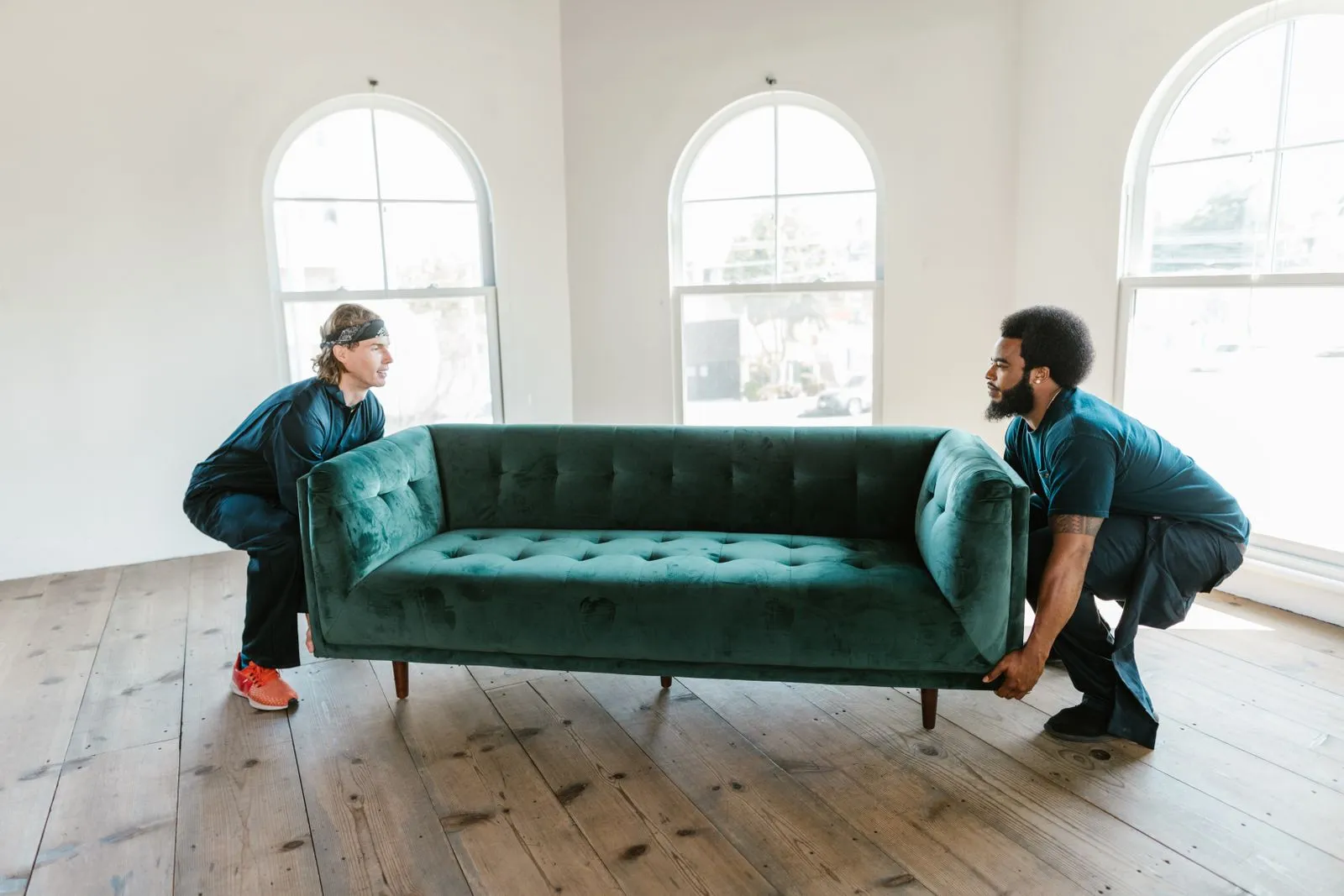

Moving a washing machine safely comes down to three jobs: refit the transit bolts if it is a front loader, drain the last of the water, and disconnect and secure the hoses. The bolts lock the drum in place so it cannot swing around on the truck, and LG, Fisher & Paykel and Bosch all say to refit them for a house move. Top loaders work differently, so the manual for your model has the final say.
Key takeaways
A front loader washing machine should have its transit bolts refitted before a house move, because the bolts hold the drum still and protect the internal parts in transit. LG's Australian support guidance also says to transport a washer upright, not lying down. Drain the water, turn the taps off, disconnect both hoses and tape the door shut the day before. At the new home, remove the bolts again before the first wash, because running a machine with the bolts in can damage it. Top loaders often use packers rather than rear bolts, so check the manual for your model.
What are transit bolts on a washing machine?
Transit bolts are long bolts that screw into the back of a front loader and clamp the drum to the cabinet. The drum in a front loader is built to move, so it can soak up vibration during a spin. That same movement is what does the damage when the machine is bounced along the Ipswich Motorway in the back of a truck, because the drum swings and knocks against the parts holding it.
Fisher & Paykel's front loader user guide describes four transit bolts at the rear, fitted at the factory to avoid damage during transport. It tells owners to keep the bolts in case they are needed for future transit, and says never to transport the machine without them properly fixed in place.
Do you need transit bolts when moving a washing machine?
For a front loader, yes. LG, Fisher & Paykel and Bosch all say the same thing. LG's Australian support guidance says that when a washer is being transported, it is mandatory to reinstall the transit bolts to prevent internal damage, and to put them back in the reverse order they came out. Bosch's washing machine installation guide says you must refit the transit bolts to prevent transport damage if the appliance is moved at a later date.
Distance is not the deciding factor. Rolling a washer out of its cavity to clean behind it is one thing. Lifting it onto a trolley, down the back stairs of a Coorparoo Queenslander and onto a truck for a run to Springfield Lakes is a move, and the drum takes the same knocks on a 30-minute trip as it does on a long one. If the machine is going on a truck, the bolts go in.
How do you put transit bolts back into a front loader?
It is a short job if you have the bolts and the spanner that came with the machine. Pull the machine out far enough to reach the back, with a towel underneath in case any water is still sitting in the hoses. Fisher & Paykel's guide sets out the order like this:
- Pull out the plastic bolt-hole covers in the back of the machine.
- Push the transit bolt, with its rubber grommet and plastic spacer, into each hole.
- Tighten each bolt with the spanner supplied with the washer until it is firm.
- Drain any water left in the machine, which on Fisher & Paykel models is done by cleaning out the pump filter.
Keep the bolt-hole covers in a zip-lock bag with the spanner, because you will need them again at the new house. Bolt positions vary between brands, so follow your own manual where it differs. Most manuals can be downloaded from the brand's website by model number, which is printed on a sticker inside the door or on the back panel.
Tape the bag to the machine
Once the bolts are back out at the new house, put them, the grommets and the spanner in a bag and tape it to the back of the washer or keep it in the laundry drawer. Next time you move, they are exactly where you need them.
What if you have lost the transit bolts?
This comes up a lot. The bolts went in a drawer years ago and the move is on Saturday. LG's support page suggests contacting LG Customer Care with your model number ready if you cannot find what you need, and the other brands run similar service lines. Replacement bolts are usually a spare part ordered against the exact model, so order them as soon as the move date is set rather than in the last week.
Do not substitute a handful of bolts from the hardware store. Transit bolts are a specific length and work with a spacer to lock the drum at the right point, and a bolt that is too long or the wrong thread can damage the machine. If replacements will not arrive in time, tell your removalist when you book. A machine moved without its bolts carries more risk, so it is worth knowing how that is handled before the day.
Do top loaders need transit bolts?
Top loaders are a different design, and they do not always use rear transit bolts the way front loaders do. Fisher & Paykel's FabricSmart top loader guide, for example, uses a bottom packer under the machine and a bowl packer inside the bowl when the washer is new, and tells owners to keep both in case they are required for future transit.
Very few people still have the packers, and in our experience a top loader travels well upright with the lid taped down and a blanket around it. Check the manual for your model anyway. Washer-dryer combos and some top loaders have their own transport instructions.
How do you drain a washing machine before moving?
Start the day before, not the morning of. Beko's Australian guide to transporting a washing machine says to disconnect the machine from the power, switch off the water supply, then undo the inlet hose by turning the threaded connection anticlockwise, with a towel under the tap to catch the leak. The drain hose then comes out of the waste outlet, again with a towel ready, and towels wrapped around the hose ends soak up whatever runs out on the way to the truck.
Front loaders hold water in the pump filter at the bottom front of the machine, and on Fisher & Paykel models that is how you drain the last of it. Have a shallow tray and old towels ready. Beko also suggests leaving the door open for at least 24 hours so the inside dries out. That step matters more than people think in Far North Queensland, where a damp drum shut up in a truck and then a garage in Edge Hill or Trinity Beach starts to smell within days. Add it to our moving day checklist so it happens the night before.

What should you do with the hoses and power cord?
Beko's guide says to clip the power cord, the water supply hose and the waste hose to the back of the machine for the move. Where there are no clips, tape them flat against the back panel. A loose hose catches on door frames and gets crushed against the truck wall.
While the hoses are off, look at them properly. If they are bulging, cracked or stiff, replace them now, while the machine is already disconnected. Keep the tap washers and any adaptors in the same bag as the transit bolts.
How do removalists move a washing machine on the day?
LG's support guidance says a washer must be transported upright and not lying down, and that is how our crews handle them. The machine goes onto an appliance trolley standing up, strapped on with a blanket between the strap and the cabinet, with the door taped shut as Beko suggests. Two people take it on stairs, one on the handles and one guiding from below, a step at a time.
Access is what makes a washing machine slow. A laundry under a high-set Paddington house usually means a narrow back stair and a tight turn at the bottom. A Newstead apartment means a booked lift with protective padding, arranged with the body corporate ahead of time. In the truck, the washer stands against the front wall or another heavy item, strapped so it cannot walk or tip on a corner, with nothing heavy stacked on its lid.
“The bolts are the one thing we cannot fix on the day. We can pad a machine, strap it and carry it down any staircase in Brisbane, but if the bolts are in a drawer somewhere at the old house, the drum is loose for the whole trip. Find them the week before.”
, R2G Moving Team
It is also worth knowing how cover works for appliances before the move. A washer with a dented panel is a different claim from one that runs badly a week later with no outside damage, and our guide to whether removalists are liable for damage explains how that tends to work in Australia.
How do you set the washing machine up at the new house?
First, take the transit bolts out again. Fisher & Paykel's guide is blunt about it: running the washer with the bolts still in will damage the machine and compromise the manufacturer's warranty. Cover the holes with the plastic plugs you kept, then reconnect the inlet hose to the cold tap, and the hot tap if your machine uses it, and hook the drain hose into the standpipe or tub.
Then level it. Bosch's installation guide says incorrect levelling can cause intense noise, vibration and the machine wandering across the floor, and recommends a spirit level and adjusting the feet until all four stand firmly on the ground. A tiled laundry floor that falls towards a floor waste, as in plenty of newer builds around North Lakes and Ripley, usually needs the feet adjusted. Turn the taps on slowly, check every connection for drips, and run a short rinse cycle empty before the first real load. If you are moving the fridge at the same time, our guide on how long to wait before turning a fridge back on covers the other half of the laundry and kitchen set-up.
Frequently Asked Questions
Can you move a washing machine without transit bolts?
It can be done, but the manufacturers advise against it. Fisher & Paykel's guide says never to transport the machine without the transit bolts properly fixed, and LG says reinstalling them is mandatory when transporting a washer. Without the bolts the drum can swing and knock against its supports on the way. If yours are lost, order replacements for your exact model before the move.
Can you lay a washing machine down to move it?
LG's Australian support guidance says a washer should be transported upright and not lying down. If the manual for your model says anything different, follow the manual. A removal truck has the height to carry a washer standing up on a trolley, so there is rarely any reason to lay it flat.
How long does it take to prepare a washing machine for moving?
In our experience it is a short job, usually well under an hour, if the transit bolts and spanner are on hand. That covers turning off the taps, disconnecting both hoses, draining the pump filter, fitting the bolts and taping the hoses and cord to the back. Do it the day before the move so the drum has time to dry out with the door open overnight.
Do you need to remove transit bolts after moving?
Yes, every time. Transit bolts are only for transport, and running the washer with them still fitted can damage the machine. Fisher & Paykel says it will also compromise the warranty. Take all of them out before the first wash, plug the holes with the covers that came with the machine, then level it and check the hose connections for leaks.
Getting your washing machine moved upright and plumbed back in on time
R2G has been moving Queensland homes since 2014 out of our Archerfield and Cairns City depots, and a washing machine comes along on most of the house moves we run. Our removalists in Brisbane and Cairns removalists move washers upright on trolleys, strapped and wrapped in blankets, and if there is a gap between settlement dates we can hold the lot in storage while you move. Tell us the washer type, and whether the transit bolts are still around, when you get a free quote, and we will plan the laundry around it.