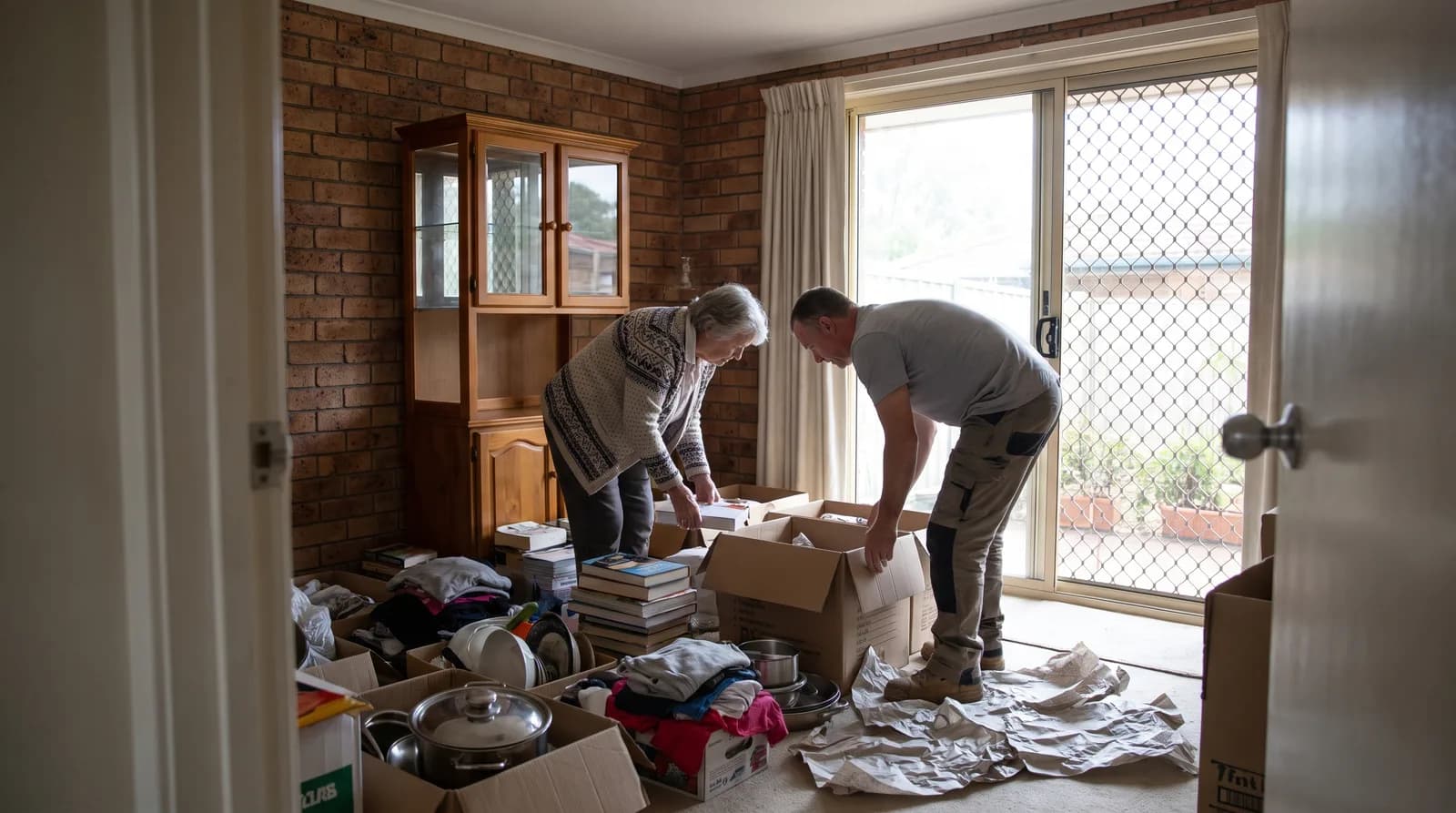

Deceased estate removals in Brisbane work best when the executor sets the timeline, the family sorts belongings in stages, and the move is booked around the real deadline, which is usually a rental tenancy ending or a house going on the market. You rarely need to clear everything in one weekend. Most of the stress comes from rushing decisions that cannot be undone.
Key takeaways
The executor or administrator decides what happens to a deceased person's belongings, so agree on who is in charge before anything leaves the house. In Queensland, a rental held by a sole tenant ends on a set timeline after their death, which the Residential Tenancies Authority explains, so find out early whether you are working to a rental deadline. Sort in three passes: keep for family, sell or donate, and dispose. Short-term storage buys time when the family is not ready to decide. Book the removal once you know where every load is going, not before.
Who is allowed to decide what happens to the belongings?
Legally, the executor named in the will, or an administrator if there is no will. The Queensland Public Trustee's guide to administering an estate lists furniture, jewellery and other personal effects as estate assets, alongside the house, the car and the bank accounts. That matters for a removal. Furniture is not just stuff to be cleared, it is part of what the executor has to identify, protect and eventually distribute.
The same guide explains that eligible people have 6 months to notify the executor of a claim on the estate, and that executors normally wait out that period before distributing assets. So if a sibling wants the dining suite and the will says something else, do not load it onto a truck for them in week two. Store it, or leave it where it is, until the executor is clear to hand it over.
This is general information from a removalist, not legal advice. For anything about the will, probate or a dispute, talk to a solicitor or to the Public Trustee directly.
How long do you have to clear a rental after a tenant dies in Queensland?
Less time than most families expect. The Residential Tenancies Authority's page on the death of a tenant says that when the only tenant dies, the tenancy ends 14 days after either the tenant's representative or the property manager gives written notice, on a date both sides agree, or on a date set by QCAT. If none of that happens, it ends one month after the death. The RTA also says the representative is responsible for removing belongings left at the rental.
In practice, call the property manager early and agree a date in writing. Most property managers in suburbs like Coorparoo, Stafford or Wynnum are reasonable when they know what is going on, and an agreed date is far easier to plan a crew around than a deadline you only found out about last week. Ask about the exit condition report and the bond too. The RTA notes that a deceased co-tenant's share of the bond can only be claimed by their estate.
A family home that is being sold usually gives you more room. The deadline there is the agent's listing date or the settlement date, and the executor controls both.
Where do you start when a house is full of belongings?
Start with the things that cannot be replaced, then work outwards. Before any sorting begins, one person should walk through and collect documents, photos, keys, jewellery and anything with a name written on it. Put all of it in one box that stays with the executor. We have seen wills, title deeds and bank cards turn up in kitchen drawers and the pockets of coats.
Then sort in three passes, room by room, rather than trying to make every decision at once:
- Keep: items going to family members, labelled with the person's name and where they live.
- Sell or donate: furniture and household goods in good condition, set aside in one room so a buyer or charity pick-up does not wander through the house.
- Dispose: broken furniture, worn mattresses and general rubbish, kept together near the front for a skip, a tip run or the council kerbside collection.
Brisbane City Council runs a kerbside collection for each suburb on a published schedule, and the council's kerbside collection calendar shows when your street is due. If the date falls inside your window, it can take a lot of the bulky waste. If it does not, a skip or a few trailer runs to the Willawong or Ferny Grove transfer stations will be quicker than waiting. Our guide to sorting a lifetime of belongings with older family members covers the sorting side in more detail.

Should you pack it yourselves or bring in packers?
Both work, and plenty of families do a mix. Packing a parent's kitchen or wardrobe can be a meaningful thing to do together, and some people want to handle every item themselves. Others live interstate, have a week of leave and cannot face a whole house of cartons. There is no right answer here.
Where packers earn their keep is the heavy and fragile end: a china cabinet, framed artwork, a piano, a glass-topped table, a garage full of tools. Our professional packing services in Brisbane wrap furniture in blankets, box glassware properly and label each carton by destination, which is what makes a multi-drop day work. A sensible split is for the family to pack the personal things, and for the packers to do the bulky and breakable items the day before the truck.
What if the family is not ready to decide yet?
Put it in storage and decide later. This is the most common reason storage comes up on a deceased estate job, and it is a good one. A house in Carindale might have to be empty for a listing in three weeks, while two of the children are still working out who wants the dining suite and whether anyone has room for Mum's sewing cabinet.
Moving the undecided items into storage in Brisbane clears the house on time without forcing a decision under pressure. It also keeps estate assets secure while the executor waits out the claims period. Have the executor arrange the storage, so it is clear the contents belong to the estate. If you are weighing it up, our piece on when storage makes sense during a move runs through the trade-offs. Before signing anything, ask how goods are protected, whether you can get in to check on them, and what insurance applies.

How does a removal to several family members work?
It is a multi-drop job, and it runs well when the planning is done before the day. A typical estate move from a Queenslander in Ashgrove might have three loads: a lounge and bedroom suite going to a daughter in Springfield Lakes, boxes of photos and a bookcase going to a son in Redcliffe, and the rest going into storage. With a two-person crew and a truck, we load in reverse order of the drops so the first stop's items come off first.
What helps on the day:
- A written list of every drop-off address, in order, with a contact name and phone number for each.
- Coloured tape or labels on each item matching its destination, so nothing goes to the wrong house.
- Access notes for each address: stairs, a long driveway, a body corporate lift booking or a narrow side gate.
- Someone at each drop who can say where the furniture goes.
If one of the family lives in Sydney, Melbourne or further away, that piece is often best on a separate booking with our interstate removalists, rather than holding the whole local job up for it.
What do you need to sort out before the truck arrives?
Access and authority. Confirm who has the keys and who will be there to let the crew in. If the property is a unit, check whether the body corporate needs a lift booking or set move hours, because many Brisbane buildings do. Tell the crew about anything unusual: a pool table, a gun safe, a garage with chemicals, or a room nobody has opened in years.
Keep the house insured until it is empty and handed over. The Public Trustee lists confirming insurance of assets as one of the executor's duties, and a vacant house is still full of estate property until the last load leaves. Arrange mail redirection as well. Australia Post's special circumstances redirection offers up to 12 months of free redirection for an executor or administrator, applied for in person at a post office with proof of your authority.
If a surviving partner is moving out of the family home at the same time, treat it as a separate move with its own pace. Our removalists for seniors in Brisbane are used to working around that, and it should never feel like it is being rushed to suit the estate clear-out.
Frequently Asked Questions
Do removalists clear out a deceased estate?
Removalists move belongings from the property to where they need to go: family homes, storage, a charity or a sale. Most will also pack. Rubbish removal, cleaning and valuations are usually separate services, so check what a removalist includes before you book, and line up a skip, cleaner or valuer if you need one. Being clear on this up front avoids surprises on the day.
How soon after a death should you book a removalist?
Book once the executor has agreed the plan and you know the deadline, whether that is a tenancy end date or a listing date. Two to three weeks of notice usually gives a removalist room to fit your preferred day, and it gives the family time to sort. For a rental with a 14-day notice period, call early, because that window goes quickly.
Can belongings go into storage while the estate is being settled?
Yes, and it is often the sensible choice. Storage lets the house be cleared on time while beneficiaries decide what they want and the executor waits out any claims period. Ideally the executor arranges and pays for it, so it is clear the goods belong to the estate. Ask the storage provider about access, insurance and how goods are protected.
Who pays for a deceased estate removal?
Costs of administering the estate, such as clearing and moving belongings, are usually paid by the estate through the executor. Where a family member takes an item for themselves, they sometimes cover that part of the move. How it is handled depends on the will and the estate, so confirm with the executor or a solicitor before booking.
Talking to a Brisbane crew about an estate move
R2G Transport & Storage has been moving Queenslanders since 2014 from our depots in Archerfield and Cairns, and we are AFRA accredited. On a deceased estate job, our Brisbane removalists will talk through the deadline, the drop-off addresses and what is going into storage before the day, then pack, pad, carry and deliver each load where it belongs, at a pace that suits the family. Send us the details and get a free quote when you are ready.